Breaking down Chalmers’ two-pronged budget
Plus: China warns US of repercussions for sharp tariff hikes; BHP boss says investors must choose restructuring strategy; Google unveils slew of AI upgrades at I/O Summit.

Good morning. Here's what happened overnight and what you need to know today.

1.
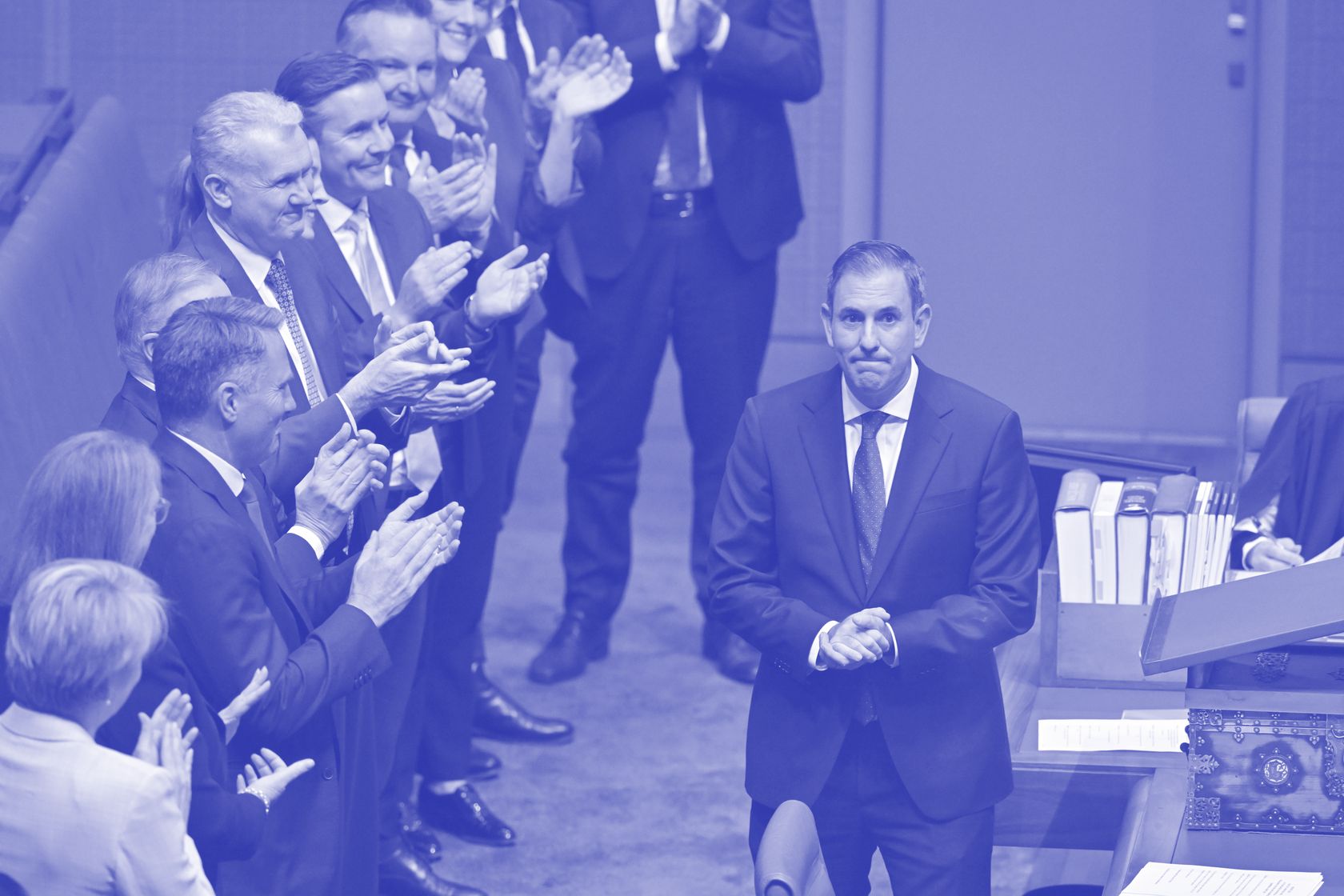
Budget breakdown: Tuesday’s two-pronged budget saw Jim Chalmers try to strike a balance between convincing Australians the government was doing enough on the cost of living, while also selling Prime Minister Anthony Albanese’s ambitious interventionist green policy, the Future Made in Australia Act. While we learned pre-budget that the government is expecting to deliver a $9.3 billion surplus in 2023-24, the news was muted by forecasts of a $28.3 billion deficit in 2024-25, and a $42.8 billion deficit the year following. Capital Brief questioned whether the government’s highly anticipated cost of living measures will actually work as promised and tame inflation. As the budget reveals, if the RBA is right on inflation forecasts — and Treasury is wrong — Chalmers will be unable to fall back on a booming economy to soften the blow. The budget also zeroed-in on the housing crisis, with Chalmers looking to quell concerns from Australians locked out of the property market with immediate rental relief and a $6.2 billion splurge to increase housing supply in the medium and long-term. Chalmer’s plan will see universities seeking to increase their international student intake above a new cap required to build extra accommodation. (Capital Brief)
2.
Tariff tiff: China’s Ministry of Commerce has said that the US should reverse its move to ramp up its tariffs on a range of Chinese imports. Earlier on Tuesday, US President Joe Biden announced plans to increase tariffs on USD18 billion ($27.16 billion) in Chinese imports across sectors the administration deems strategic to national security. The largest tariff increase Biden proposes is to electric vehicles, which will quadruple from 25% to 100% in 2024. The US tariffs will impact Chinese imports including steel and aluminium, solar cells, batteries, semiconductors, medical products and critical minerals. A statement published by the Ministry of Commerce says that “China will take resolute measures to safeguard its own rights and interests […] The US should immediately correct its wrong actions and cancel the additional tariff measures against China.” China accused the US of increasing the tariffs “out of domestic political considerations” as Biden ramps up his electoral campaign ahead of the US election later this year. While the White House has not yet commented on how it anticipates Beijing may choose to retaliate to the announcement, China has previously used counter-tariffs on US exports as a response. (Capital Brief) (White House press release)(Chinese Ministry of Commerce press release)
3.
Choose your fighter: Speaking at a conference in Miami on Tuesday, BHP CEO Mike Henry said that it is up to investors to decide on whether the BHP or Anglo American management team will be better positioned to reap value from the companies’ respective restructuring plans. Anglo is currently fending off takeover offers from BHP, and released its own restructuring strategy after rejecting a second offer from BHP on Monday evening. Anglo has argued that BHP’s requirement to spin off Anglo’s South African assets ahead of the takeover was not feasible. However, Henry countered that Anglo’s own plans to spin off its platinum unit is “a pretty clear indicator that it is doable.” Henry added that “Shareholders must decide which plan creates the greatest value, soonest [...] Which team has the better track record of execution.” (Bloomberg)(Capital Brief)
4.
Google it: Google’s annual developer conference kicked off with a bang this morning, with CEO Sundar Pichai announcing a slew of new AI features set to help the tech giant hold its position as the world’s most popular search engine. On the I/O stage, Pichai unveiled a “fully revamped, new search experience” that it will roll out across the US this week, as well as a new Gemini-powered search which will be made available internationally “soon.” The new and improved search engine will create ‘AI overviews,’ summaries created by Gemini AI that appear at the top of a search engine. Another major announcement already revealed at the summit is Project Astra, a ‘multimodal’ AI assistant also powered by Google’s Gemini model, which can respond to voice commands and analysis of what it sees through a phone’s camera or connected smart glasses. The new ‘Gems’ feature will let users create personalised AI chatbots to assist with specific tasks. (Bloomberg)(The Verge)
5.
The AI Oracle: Elon Musk’s artificial intelligence startup, xAI, is nearing a USD10 billion deal to rent cloud servers from Oracle, according to sources cited by The Information. While xAI is currently finalising a USD6 billion equity funding round, the new deal, which would make xAI one of Oracle's biggest customers, implies that the startup will need to raise significantly more capital down the line. xAI was founded by Musk in 2023 to counter what he described to be more “woke” or politically correct AI models created by Google and OpenAI. Oracle doesn’t currently work with xAI rivals OpenAI or Anthropic, which, along with the fact that xAI is already Oracle’s largest renter of Nvidia H100 server chips, may make the partnership even more attractive. (The Information)
6.
Corporate cuts: US retail giant Walmart is slashing hundreds of corporate jobs and has asked remote workers to return to offices, according to sources cited by the Wall Street Journal. Walmart is currently the largest employer in the US, with 1.6 million employees across 4,600 stores. Tens of thousands of staff are corporate workers. In addition to the layoffs, Walmart is requiring workers in the company’s small offices including Dallas, Atlanta and Toronto to move nearer to the retailer’s larger hubs in Arkansas, New Jersey or Northern California. In late April, Walmart announced its plans to shutter all of its 51 health centres and abandon plans to expand the network of low-cost clinics, due to rising costs and reimbursement challenges. The initiative was launched in 2019 and had aimed to open over 75 clinics offering medical, dental and behavioural health services, by the end of 2024. (Wall Street Journal)
7.
EV emissions: A complaint filed by the Environment Democracy Project on Monday argues that Tesla has violated the US’ federal Clean Air Act hundreds of times through the emission of pollutants at its plant in Fremont, California. The Environmental Democracy Project is seeking an injunction to stop further pollution, as well as fines of up to USD121,275 per day, per violation of the Act. The nonprofit states that since January 2021, Tesla exposed residents who live near the plant and workers to excessive nitrogen oxides, arsenic, cadmium and other harmful chemicals. The lawsuit adds to existing pressure on the EV maker after the Bay Area Air Quality Management District requested that an independent board order Tesla to reduce emission from its paint shop operations at the Fremont facility in early May. Earlier this year, Tesla also settled a lawsuit with 25 counties in California, agreeing to pay USD1.5 million over claims that it mishandles hazardous waste at various locations in the state. (Reuters)
8.
IPO-now-pay-later: CEO of buy-now-pay-later unicorn, Klarna Bank, has told Bloomberg that the firm is ready for an IPO after a successful expansion globally and in the US. Chief Sebastian Siemiatkowski said Klarna is “definitely ready” and when questioned about the possibility of a stock sale occurring before the first quarter of 2025, he replied: “Everything’s possible.” Bankers believe that Klarna could attract an IPO valuation between USD15-$20 billion. Reports emerged earlier on Tuesday that the BNPL firm has secured backing from shareholders and regulators to establish a new UK-registered holding company ahead of a potential float in New York next year. In March, Siemiatkowski indicated that with 40 million US users, it is the firm’s biggest market. (Bloomberg)
