Disaster declared as out-of-control bushfires tear across Victoria
Plus: US seizes tanker, ramps up Venezuela oil talks; xAI restricts Grok image tool over deepfakes; Iran threatens protestors with death penalty.

Good morning. Here's what happened overnight and what you need to know this weekend.

1.
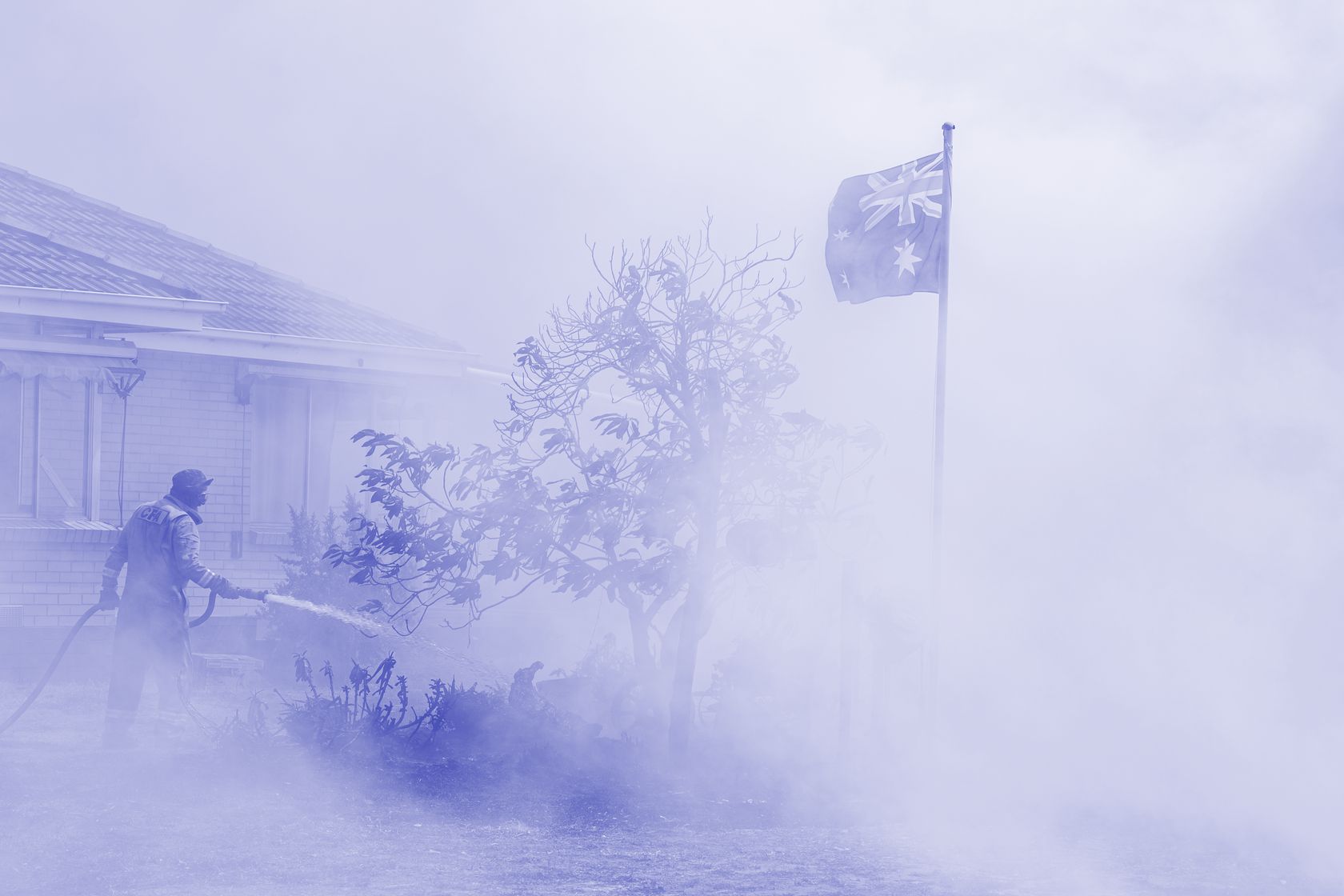
Disaster declared: The Victorian Premier declared a State of Disaster on Saturday morning after out-of-control bushfires continued ravaging the state throughout the night. Three major fires were still burning on Saturday morning at Longwood, Walwa and Dargo. Jacinta Allan said that the state of disaster covers 18 local government areas and one alpine resort, giving emergency responders greater powers to forcibly remove people whose lives are in danger. It also allows the state government to direct authorities to possess a private property to respond to the disaster and control movement in the area. Allan said the declaration “sends a clear message to those who have been advised to leave: if you can, you must.” Andrew King, a climate scientist at the University of Melbourne, told the AFR that in addition to climate change, strong atmospheric warming over Antarctica had also contributed to this week’s unusual combination of La Nina and strong bushfire conditions. One person has reportedly died and concerns remain for a man, woman and child who remain missing after a house was destroyed by the Longwood bushfire in central Victoria. (Jacinta Allan)(Disaster Declaration)(ABC)(The Australian)(Capital Brief)
2.
Battle ships: The US seized another sanctioned oil tanker in the Caribbean Sea, US Southern Command confirmed on Friday. The ‘Olina’ oil tanker is the fifth vessel linked to Venezuela to be captured by US forces in recent weeks, as the Trump administration continues its efforts to control exports of the country’s oil following its capture of President Nicolás Maduro. Southern Command said that US troops in coordination with the Department of Homeland Security, launched from the USS Gerald R. Ford and apprehended tanker Olina in the Caribbean Sea without incident in a pre-dawn operation. Meanwhile, US President Donald Trump said he cancelled a second wave of attacks on Venezuela due to the country’s cooperation with the US. Trump said the US and Venezuela are “working well together, especially as it pertains to rebuilding, in a much bigger, better, and more modern form, their oil and gas infrastructure.” Trump met with executives from the world’s largest oil companies on Friday, saying he could “cut a deal” as soon as today to allow certain oil companies to operate in Venezuela. His plan is for the US's "giant oil companies" to spend "at least USD100 billion of their money to rebuild oil production capacity and infrastructure. Elsewhere, Chinese, Russian and Iranian vessels sailed into a South African port ahead of week-long naval drills. (US Southern Command)(Capital Brief)(BBC)(CNN)(Reuters)(CBS)(WSJ)(FT)
3.
Deepfake danger: Elon Musk’s xAI restricted Grok’s image-generation feature to paid users of the social media platform on Friday, after the AI tool was widely condemned for generating sexualised deepfake images of women and children. The Grok chatbot replied to users on X that a paid subscription would now be needed to generate and edit images. The UK Prime Minister Keir Starmer’s office said the restriction didn’t go far enough. The move comes after the Office of Australia’s eSafety Commissioner wrote to X “seeking further information about the safeguards in place to prevent Grok’s misuse on its service and to comply with these obligations”. The online safety regulator confirmed on Wednesday that it was investigating complaints about sexualised deepfake images generated on X and has now reiterated concerns the content "may sexualise or exploit people, particularly children". Meanwhile, three Democratic US senators called on Apple and Alphabet's Google to remove X and Grok from their app stores, citing the spread of non-consensually generated sexual imagery via the Grok tool. (Bloomberg)(eSafety Commissioner)(Reuters)(Capital Brief)
4.
Iran protests: Iranian officials stepped up a crackdown on protests that have gripped the country, shutting down internet and phone networks and threatening the death penalty for armed protesters. Unrest has intensified to span Iran’s 31 provinces since breaking out almost two weeks ago, prompted by the country’s crippled economy. US-based Human Rights Activists News Agency said on Friday that the death toll had reached at least 62 with more than 2,300 detained. Trump has threatened to attack Iran should authorities begin killing protesters, with Supreme Leader Ayatollah Ali Khamenei responding that the US President should “focus on the problems of his own country.” Tehran’s prosecutor Ali Salehi said Friday the judiciary would charge armed protesters with death sentences, on charges of ‘Moharebeh’ (waging war against God) – an offence punishable by death and used in previous protests to issue death penalties for some alleged armed protesters. (CNN)(BBC)(AP)(HRANA)(CBS)
5.
Strong close: The S&P 500 notched an all-time intraday high on Friday on the heels of the latest nonfarm payrolls report. The broad market index closed up 0.65%, the Nasdaq climbed 0.81% and the Dow Jones added 237.96 points, or 0.48%. The December jobs report saw payrolls increase by 50,000, below the 73,000 new jobs that economists surveyed by the WSJ had expected to see, and was weaker than the revised 56,000 jobs added in November. Job losses in October were also revised down, to a fall of 173,000. The unemployment rate also inched down to 4.4%. Traders maintained positions that Fed policymakers will hold rates steady at their upcoming January meeting on the data. Meanwhile, US household net wealth in the third quarter climbed nearly USD6.1 trillion ($9.12 trillion) from the prior quarter to a fresh record of USD181.6 trillion, the Fed said in its quarterly release of national accounts data. Elsewhere, shares in Revolution Medicines closed up more than 10% on reports that Merck is in talks to acquire the biotech in a deal valued between USD28 billion and USD32 billion. (CNBC)(Capital Brief)(BLS)(Bloomberg)(Reuters)(WSJ)
6.
Going nuclear: Meta unveiled a series of electricity deals to back existing plants and support development of advanced nuclear technology to meet the massive amounts of energy required to power its AI data centres. The combined agreements will support as much as 6.6 gigawatts of existing and new generation by 2035 Meta said, making it one of the most significant corporate purchasers of nuclear energy in American history. The tech giant agreed to purchase electricity from three existing Vistra Corp plants, as well as several small reactors that Oklo Inc and TerraPower LLC are planning to build over the coming decade. Without disclosing detail around funding, Meta said that the agreements will mean that Oklo and TerraPower will have greater business certainty and can raise capital to move forward with the planned projects. Meta said that the projects will deliver power to the grids that support its operations and aims to see the first new reactors delivered as soon as 2030 and 2032. Shares in Vistra and Oklo closed up 10.47% and 7.9% respectively. (Meta)(Capital Brief)
7.
From the (coal) ashes: Rio Tinto is open to retaining Glencore’s coal business if revived merger talks between the two companies are successful, sources told Bloomberg. The move would mark a major pivot for Rio which had sold off its last coal mines in 2018 following investor pressure. The return to the negotiating table to create a $300 billion mega miner has surprised some shareholders and analysts who say the move is completely at odds with the Anglo-Australian miner's recently articulated strategy shift. The potential all-share merger discussions are driven by the pair’s aim to expand copper assets, a Capital Brief source explained. Wilson Asset Management portfolio manager John Ayoub, who holds shares in Rio Tinto for clients, told Capital Brief the deal comes as “somewhat of a surprise” given the “clear message” at its capital markets day last month of “a disciplined approach to capital allocation”. (Bloomberg)(Capital Brief)
8.
Wartime trades: Ukrainian President Volodymyr Zelensky told Bloomberg he is discussing a potential free trade agreement with the US as part of a broader prosperity package aimed at propelling the country’s recovery after the war. The leader said the deal would include zero tariffs on US trade and apply to some industrialised parts of Ukraine, giving the country “very serious cards” compared with neighbouring states and potentially luring investments and businesses, Zelensky told the masthead. The leader said details need to be discussed directly with President Trump, adding that such an agreement would also serve as an additional economic security guarantee. Zelensky said he expects to meet Trump either in the US or at Davos later this month. The comments come after Russia claimed it fired a hypersonic Oreshnik missile at a target in western Ukraine overnight Thursday, near the Polish border, in what has been labelled a brazen “warning” to the wider continent and the US. (Bloomberg)(CNN)(NYT)(NBC)
