Fed holds in most divisive vote since 1992, as Powell vows to stay
Plus: Outgoing Fed chair warns legal attacks are battering Fed’s independence; Oil surges back to USD120 ahead of Big Tech earnings; Tim Ayres eyes more AI deals with tech giants.

Good morning. Here’s what happened overnight and what you need to know today.
1.
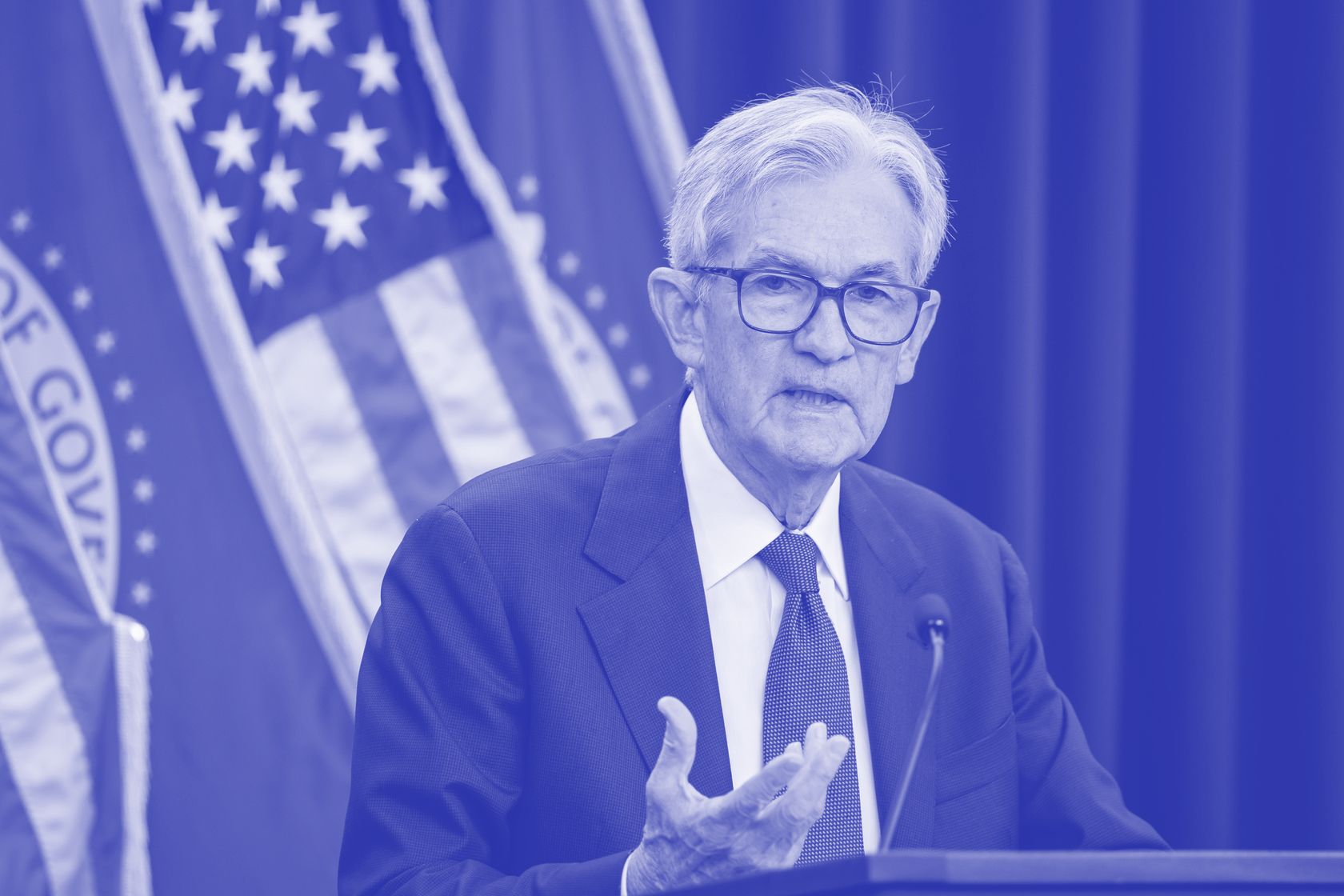
Four dissents: The Federal Reserve held rates steady for a third straight meeting in an 8-4 vote, as four officials split over the path ahead. It was the most divided decision since 1992 and came after the Senate Banking Committee cleared Kevin Warsh to replace Jerome Powell as chair before his term expires on 15 May. Three regional presidents — Beth Hammack from Cleveland, Neel Kashkari from Minneapolis and Lorie Logan from Dallas — backed the hold but voted against statement language signalling a bias toward future rate cuts. Governor Stephen Miran dissented in the opposite direction, favouring a quarter-point reduction. The Fed’s statement said inflation was “elevated, in part reflecting the recent increase in global energy prices,” as Brent crude topped USD119 per barrel, as the US-Iran standoff over the Strait of Hormuz continued. Following the decision, markets were pricing in no full rate cut through March 2027, according to the FT, while two-year Treasury yields rose and stocks dipped slightly. (Capital Brief)(US Fed)(Bloomberg)(Reuters)(WSJ)
2.
Powell stays: Breaking with a tradition unbroken since 1948, Powell announced at his final press conference as chair that he would remain at the Fed as a governor after his term ends on 15 May, saying he had “no choice” but to stay given the ongoing legal attacks on the institution. “My concern is really about the series of legal attacks on the Fed which threaten our ability to conduct monetary policy without considering political factors,” Powell told reporters. “I worry that these attacks are battering the institution and putting at risk the thing that really matters to the public.” Powell said he would serve “for a period of time to be determined” and vowed to keep a “low profile,” pledging he would not act as a “shadow chair” to undermine Warsh’s leadership. “That’s just something I would never do,” he said. He made clear the DoJ’s decision last Friday to drop, but leave open the possibility of restarting, its investigation into cost overruns at the Fed’s headquarters had not met his threshold. “I’m waiting for the investigation to be well and truly over with finality and transparency. I will leave when I think it’s appropriate to do so,” he said. The decision sets up a fresh clash with Donald Trump, who has vowed to fire Powell if he does not leave when his chairmanship ends. Asked if he believed Warsh would resist pressure from the US president, Powell said he believed Warsh when “he testified very strongly to that effect,” adding “I’ll take him at his word.” (Capital Brief)(US Fed)(Reuters)
3.
Back to USD120: Oil surged back to USD120 per barrel after Donald Trump vowed to keep his naval blockade of Iran in place until Tehran agreed a nuclear deal, deepening a global energy crisis and sending Wall Street lower ahead of a crucial night of Big Tech earnings. Brent crude climbed 7.8% to USD119.95 a barrel in their eighth consecutive day of gains after the US president told Axios he had rejected Iran’s offer to reopen the Strait of Hormuz. US crude inventories also fell more than six million barrels last week, far exceeding analyst expectations of just over 200,000 barrels. The S&P 500 was 0.08% lower in late afternoon trading, with the Nasdaq down 0.06% ahead of earnings from four Magnificent Seven members after the close: Alphabet, Amazon, Meta and Microsoft. AI capital expenditure and revenue growth are expected to be the key focus for investors. With the Iran war continuing, money markets have abandoned wagers on a rate cut this year and began pricing in the chance of a hike in 2027, as 10-year Treasury yields rose to a one-month high of 4.4%, according to Bloomberg. Elsewhere, Bill Ackman’s Pershing Square USA sank 16% in its trading debut after the combined offering raised USD5 billion, about half the top range expected. (Bloomberg)(Reuters)(WSJ)(FT)(Axios)
4.
Soc(ai)l good: Industry Minister Tim Ayres confirmed the Albanese government expects to seal more deals to collaborate with tech giants on AI in the wake of recent agreements with Anthropic and Microsoft. But in an interview with Capital Brief, Ayres said the government’s AI ambitions depended on close cooperation with state governments to ensure data centres had a social licence amid concern about their use of water and power. Last month, Ayres released a statement of expectations about data centres, which (among other things) pushes tech giants to commit to working with Australian startups to develop their use of AI. Ayres said he was “building momentum” in the talks, adding that it is critical he work with states to advance planning and approval processes for data centres in accordance with the statement of expectations. With over 300 data centres, “None of the states want a race to the bottom on electricity or water questions,” Ayres said. (Capital Brief)
5.
Oil diplomacy: Foreign Minister Penny Wong urged China to resume exports of jet fuel, petrol and fertiliser to Australia, in order to continue receiving supplies of iron ore and gas. During meetings with Chinese officials on Wednesday as part of a tour across Asia aimed at bolstering energy security for Australia, Wong said that Australia’s iron ore, food and gas exports to China are central to the region’s supply chains. “The inputs China supplies to Australia, including jet fuel, support the Australian resources sector, which in turn helps to maintain the flow of commodities that are so important in the bilateral trading relationship,” Wong told reporters after meetings with her counterpart Wang Yi. “I can confirm the Chinese government is facilitating engagement with Australian businesses on jet fuel,” Wong said. Chinese state-owned oil companies are now reportedly engaging directly with Australian businesses on jet fuel sales, with oil major Sinopec coordinating the discussions. (AFR)(Bloomberg)(SMH)(The Australian)(ABC)(Capital Brief)
6.
Outta (El)sight: Israel-based Elsight is now on a run that eclipses even the widely hyped names of DroneShield and Electro Optic Systems. Listed on the ASX in 2017, Elsight has rocketed more than 1,500% over the last 12 months, cracking the ASX 300 index in last month’s rebalance. During a call from Tel Aviv, chief executive Yoav Amitai told Capital Brief his company’s elevator pitch in 10 words: “creating enabling technologies for uncrewed systems to complete their missions”. Unlike DroneShield and EOS, which make solutions to stop drones and other uncrewed aircraft systems, Elsight supplies communication modules to drone manufacturers to support those systems. Its flagship Halo platform aggregates all available communication paths into one pipe for beyond visual line of sight (BVLOS) control. Granted ‘Blue List’ status in the US this week, military units can buy Halo technology directly through an acquisition marketplace run by the Department of War. When asked about the longevity of Elsight’s current run, Amitai points to ever-increasing defence budgets as governments ramp up from cyclically low spending. (Capital Brief)
7.
Black box: Blackstone is folding its growth business into a new AI-focused division, Blackstone N1, as the USD1.3 trillion manager doubles down on AI, its single-biggest business driver, Bloomberg reported citing an internal memo. The new San Francisco-based unit will be led by veteran executive Jas Khaira, relocating from New York, and will serve as a centralised AI investing resource across the firm, overseeing stakes in OpenAI and Anthropic alongside its Tactical Opportunities and BXPE businesses, Blackstone’s private equity fund for wealthy investors. “AI is reshaping every business at the firm,” CEO Steve Schwarzman and president Jon Gray wrote in the memo, adding the firm needed a dedicated team “positioned at the centre of this critical area.” Eight of Blackstone’s 10 best-performing investments last quarter were in the AI ecosystem, and the firm already owns the largest data centre operator in the US. The restructure follows a difficult period for the growth division led by Jon Korngold, which raised USD4.5 billion for its debut 2021 fund before rising interest rates and falling startup valuations weighed on returns. Its second fund raised the same amount, well below initial ambitions of more than double that. (Bloomberg)
8.
Please explain: A wake-up call on AI or marketing hype? Now the dust has settled on the announcement of Anthropic’s powerful AI tool, legal cyber experts say Claude Mythos is a bit of both. Ashurst Risk Advisory partner John Macpherson said regulators in the US, UK, Australia and Canada were already discussing how the financial services sector was responding. “It is only a matter of time before we see similar ‘please explain’ engagement in other critical sectors,” adding that governments “are all over it”. “I’m confident our big five banks all looked at Mythos very quickly and all started to rapidly take what they considered to be the best possible action that they could.” Ben Di Marco, of global risk firm WTW, said while Claude Mythos is “a step change in capability”, he detects a “significant amount of smoke and marketing hype that Anthropic is generating, which likely distorts the reality of what the tool currently is, and what it is actually doing”. (Capital Brief)
