Iran, Israel halt strikes but keep the door open
Plus: Bargain hunters rescue Nasdaq after trillion-dollar meltdown; Intel surges on report Google placed major chip order; Angel investors demand budget fix.


Good morning. Here’s what happened overnight and what you need to know today.
1.
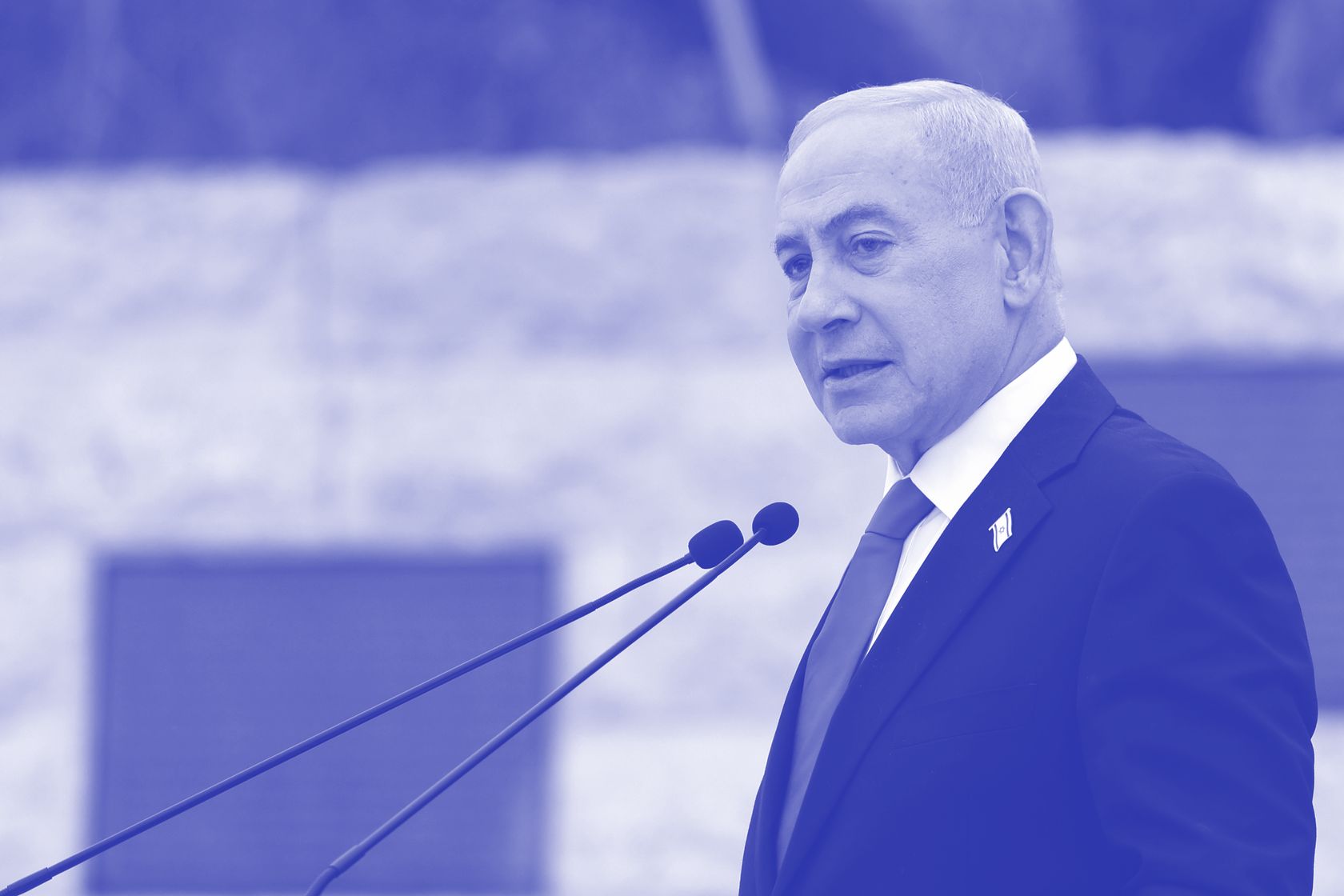
Cease fire: Israel and Iran each announced a halt to military strikes, with both sides warning they may resume hostilities, after the most serious exchange of fire since the April ceasefire threatened to collapse US-led peace negotiations with Tehran. Trump called Benjamin Netanyahu asking him to back off on new strikes on Iran, The New York Times reported citing unnamed officials. “I call the shots. I call all the shots. He doesn’t call the shots,” Trump told the FT when asked whether Netanyahu would have to accept any US-Iran deal. “He won’t have any choice.” Trump also posted on social media that Israel and Iran must “immediately stop ‘shooting’" and that both sides were “looking to do an immediate CEASEFIRE". Iran’s Revolutionary Guards announced the end of its current military operations via semi-official Fars news agency, warning of “a far stronger and more forceful response” if Israel continued strikes in Lebanon. In a recorded statement, Netanyahu said Israel’s “fire is on hold” against Iran but that it would respond “with great force” if attacked again. The exchanges began after Israel struck Beirut’s Dahiyeh suburb targeting Hezbollah, prompting Iran to fire close to 30 ballistic missiles at northern Israel (all intercepted with no casualties reported) before Israel launched strikes on military targets in western and central Iran. Brent crude, which surged as much as 5.4% to above USD98 a barrel during the exchanges, fell to around USD94.70 after Iran’s announcement. (Reuters)(BBC)(FT)(Bloomberg)(Capital Brief)
2.
Dip buyers: US-listed chipmakers rebounded as dip buyers lifted the Nasdaq 0.86% higher, recovering ground after Friday’s rout that wiped out USD1 trillion in market value. The S&P 500 was up 0.30% and the Dow Jones Industrial Average fell 0.16%. The Philadelphia Semiconductor Index was 5.61% higher, as cooling Middle East tensions helped sentiment. The rebound was led by chipmakers including Nvidia and Micron. Intel surged after the Information reported Google had placed an order for more than three million tensor processing units in 2028. Marvell Technology jumped over 9.63% after S&P Dow Jones Indices said it would join the S&P 500 on 22 June. Morgan Stanley strategist Mike Wilson, who maintained an S&P 500 year-end target of 8,000, called Friday’s selloff “ultimately healthy”, while Citigroup raised its year-end S&P 500 target to 8,100 from 7,700 after a “big step up” in earnings expectations. Bank of America Securities struck a more cautious note, advising investors to “take profits" as 70% of its bear-market signals had been triggered, with strategist Savita Subramanian setting a year-end S&P 500 target of 7,100. Meanwhile, SpaceX’s IPO, on track for Thursday ahead of Friday trading, was “well oversubscribed” Bloomberg reported citing unnamed sources. (WSJ)(Reuters)(Bloomberg)
3.
Good Intel: Intel shares surged as much as 13.5% to USD112.54 after The Information reported that Google has placed an order with the chipmaker to manufacture more than three million of its tensor processing units in 2028, with Nvidia also testing Intel’s technology for a forthcoming processor, as TSMC struggles to meet overwhelming demand for its chip manufacturing capacity. The stock has roughly tripled in value this year. Google decided to tap Intel after months of testing the chipmaker’s advanced packaging technology, the publication said, citing unnamed sources. Nvidia has not yet placed an order but is testing whether Intel’s technology can be used to make a forthcoming processor that combines four graphics chips into a single unit, tied to its Feynman series GPU architecture due in 2028, according to the report. TSMC CEO CC Wei told shareholders last week that global chip supply cannot keep up with AI-driven demand for years, and that TSMC cannot satisfy demand from American customers even as it builds more manufacturing capacity in the US. SK Hynix, one of the world’s largest suppliers of high-bandwidth memory, is also testing Intel’s packaging technology, The Information added. (The Information)(Bloomberg)
4.
Angel dust: Australia’s angel investors say the May federal budget looked after venture capital funds while leaving the country’s earliest-stage backers exposed, and they are pressing the government to update a startup tax concession that hasn’t been touched since 2017. The budget lifted investment thresholds on the Early Stage Venture Capital Limited Partnership (ESVCLP) and VCLP structures used by venture funds but made no change to the Early Stage Innovation Company (ESIC) incentive, designed for earlier, riskier investments. Cheryl Mack, CEO of Aussie Angels, said the omission compounds the budget’s wind-back of the 50% capital gains tax discount, leaving angels worse off on two fronts. “I may as well just put my money into an ETF,” she said. There is broad agreement that ESIC is no longer doing what it was designed to do, channel capital into the earliest and riskiest startups. Mack said the maximum revenue threshold of $200,000 a year is easily exceeded by fast-growing companies in their first year, the $1 million expense cap is too low for deep-tech and biotech businesses, and the $50,000 retail investment limit is too small to build a viable portfolio. (Capital Brief)
5.
Cook’s last WWDC: Apple investors gave a tepid reception to the next generation of its artificial intelligence platform after the company unveiled an overhauled Siri digital assistant, rebranded Siri AI, at its annual Worldwide Developers Conference in Cupertino, California. Shares fell 1.9%, after an earlier gain of more than 3% fizzled during the presentation. The new Apple Intelligence system, underpinned by Google’s Gemini models, includes a standalone Siri app, a more conversational interface and what Apple called “broad world knowledge” allowing the assistant to reach out to the web for information. “Siri is now a profoundly more capable assistant,” Apple vice president Mike Rockwell said. Many of the new features are similar to capabilities Apple unveiled two years ago only to delay their release, and the new Siri will be released as a beta test to consumers this fall. Siri AI will not be available initially in the EU on iPhones or iPads and will not be available in China at all as the company works through regulatory requirements. Apple also announced an overhaul of its Screen Time parental controls, a rebuilt search infrastructure and a new macOS called Golden Gate. It was the last WWDC for outgoing chief executive Tim Cook, who steps down in September when hardware engineering chief John Ternus takes over. (Apple)(Reuters)(Bloomberg)(CNBC)(Wired)(The Verge)
6.
Quantum leap: Former Broadcom chief executive Scott McGregor has been appointed chair of quantum computing business Diraq, as the University of New South Wales research spinout looks to capitalise on the billions of dollars put up by the US government to grow the industry. McGregor helmed Broadcom from 2005 until it was merged with Avago Technologies in 2016 for USD37 billion ($52 billion). Broadcom is now worth nearly USD2 trillion. Diraq founder and CEO Andrew Dzurak told Capital Brief the appointment reflects the company’s own maturity as it moves from an R&D-intensive phase towards manufacturing at scale. The appointment comes weeks after Diraq received a USD38 million letter of intent from the US CHIPS Research and Development Office to help build an end-to-end quantum supply chain in America in exchange for a minority equity stake, and as it progresses through DARPA’s quantum benchmarking initiative alongside Australian competitor Silicon Quantum Computing for an additional USD300 million in funding. Dzurak said the company will need to raise further capital to drive its US expansion and has received incoming interest from investment banks, but has “no plans at the moment for any imminent IPO”. (Capital Brief)
7.
All that SaaS: The value of private equity technology deals plunged since the end of last year as investors have grown more cautious about what companies are worth in the age of artificial intelligence, according to a Bain & Co report cited by Bloomberg. Global buyout deal value fell 70% to USD20 billion in the first quarter as fewer large deals were completed, with valuations of software companies falling about 8% in the period compared with a decline of 0.3% for all other sectors. Meanwhile, the value of software deals fell to USD50 billion in the first five months of 2026, down from USD88 billion in the same period last year, and the lowest total for the first five months of a year since 2020, according to PitchBook data analysed by the Financial Times. Fears that software companies’ business models would succumb to AI’s advances exploded at the start of the year when Anthropic launched a range of productivity tools that challenge existing software programmes. “Until an investor knows what a business may be worth post-AI adoption, it’s impossible for them to make a case to their investment committee,” said Paul-Noël Guély of Arma Partners. Private equity has made little progress in clearing the exit backlog, with a growing number of companies “essentially trapped in portfolios”, the Bain report said. (Bloomberg)(FT)
8.
Shaken: A 7.8-magnitude earthquake struck off the coast of the southern Philippines yesterday morning local time, killing at least 35 people, injuring more than 200 others and sending a 1-metre tsunami into nearby coasts. The quake was the most powerful to strike the Philippines in 50 years, according to US Geological Survey figures. Several mostly low-rise buildings collapsed or sustained heavy damage in General Santos, a port city of more than 700,000 people and a regional hub for the tuna export industry. A landslide triggered by the quake killed 13 villagers in Glan, a municipality in Sarangani province. About 70,000 people were displaced and about a dozen remained missing, according to disaster management and civil defence officials cited by The New York Times. The quake struck on the first day of school after a two-month summer break. Video shared by Mahayahay Elementary School showed children screaming and crying when a shed crumbled to the ground. Tsunami warnings issued by authorities in the Philippines, Indonesia and Malaysia were later downgraded. (AP)(NYT)
