Musk runs out of time against OpenAI
Plus: Silicon Valley’s AI arbiter flags Sharon AI, IREN on security; Trump says he called off Iran strike; Overlooked budget paragraph threatens to close Aussie biotechs.


Good morning. Here’s what happened overnight and what you need to know today.
1.
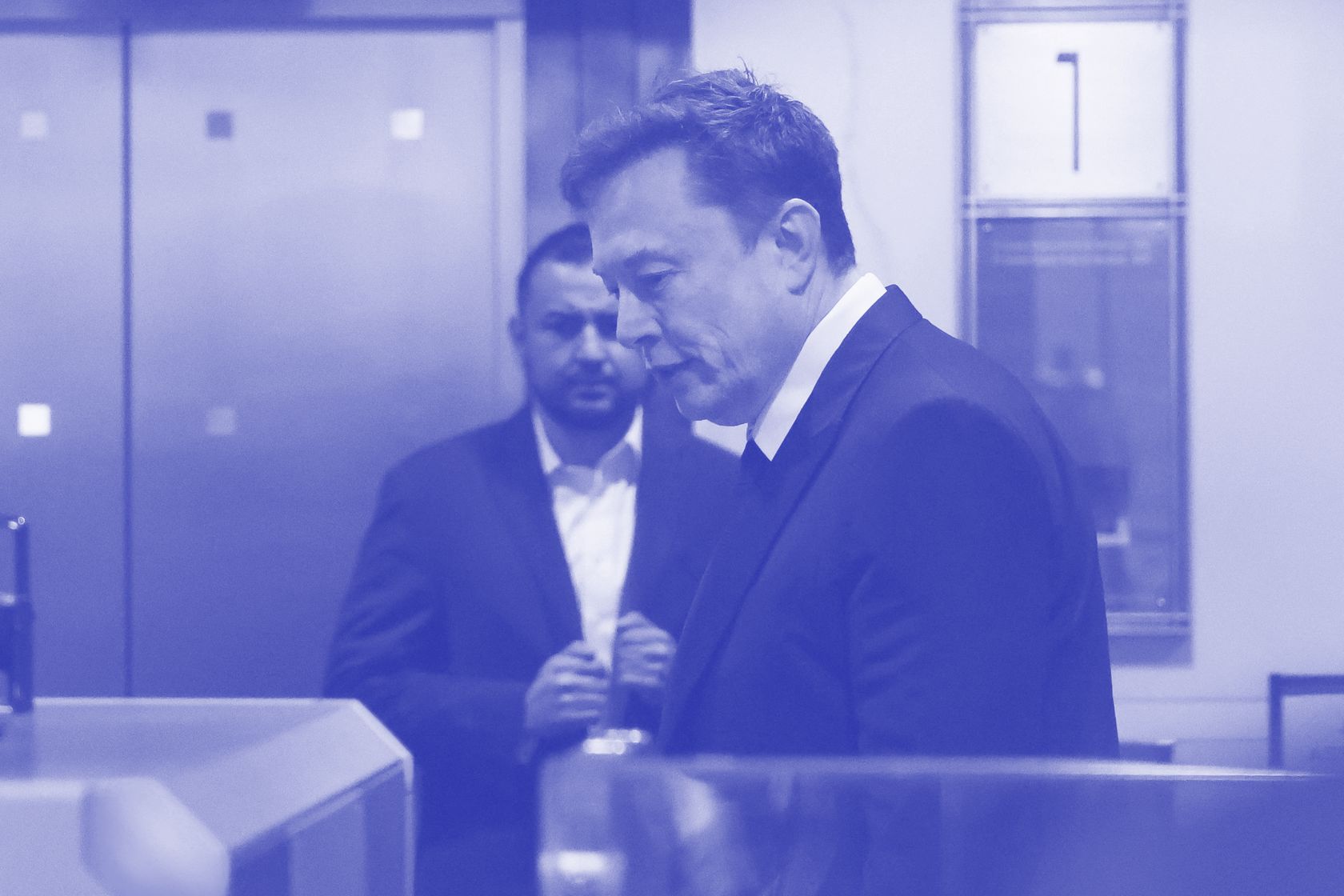
Too late: A California jury unanimously dismissed Elon Musk’s lawsuit against OpenAI and Sam Altman after less than two hours of deliberation, finding that Musk brought his claims of breach of charitable trust and unjust enrichment after the statute of limitations had expired. The verdict clears the way for OpenAI’s planned initial public offering, which according to reports could value the company at close to USD1 trillion. Musk had sought damages of more than USD180 billion, the removal of Altman and president Greg Brockman from their leadership roles, and the unwinding of OpenAI’s conversion to a for-profit company. He had described the conversion as “stealing a charity.” The jury found Musk was aware of the behaviour described in his complaint as far back as 2021 but did not file suit until 2024, after the three-year statute of limitations had expired. According to media reports, US District Judge Yvonne Gonzalez Rogers said she was “prepared to dismiss on the spot,” citing “a substantial amount of evidence to support the jury’s finding.” Musk’s lawyer said his side reserved its right to appeal. OpenAI’s lead counsel William Savitt said he was “delighted” with the decision, while Microsoft, also a defendant, also welcomed the jury’s finding. “The facts and the timeline in this case have long been clear and we welcome the decision to dismiss these claims as untimely,” the company said. Musk’s xAI is pursuing separate trade-secret theft and antitrust claims against OpenAI. (Capital Brief)(NYT)(WSJ)(Reuters)
2.
God’s verdict: The research house namechecked by Nvidia chief executive Jensen Huang at his latest developers conference and described by others as “the arbiter. They’re like God” of AI has quietly turned its eye to Australia’s emerging neocloud sector, and the findings will make for difficult reading to some investors. SemiAnalysis, whose ClusterMAX system rates more than 100 GPU providers globally for buyers, has placed ASX aspirant Firmus in its “silver” tier, the third-highest of five ranking categories, putting it alongside established hyperscalers Google Cloud and Amazon Web Services. But Nasdaq-listed pair Sharon AI and IREN land in the lowest possible “not recommended” category, blocked by a failure to complete SOC 2 or ISO27001 security compliance — what SemiAnalysis technical staffer Jordan Nanos called the “minimum standard for security” for companies handling sensitive AI training data. A Sharon AI spokesperson told Capital Brief the company is “continuing to go through steps” to achieve both certifications, and said it has “no issue” with SemiAnalysis’ rating “as others in our sector also are in the same category and are doing well with big, reputable deals.” IREN and Firmus did not comment. (Capital Brief)
3.
Attack off: Donald Trump said he called off a military strike on Iran planned for Tuesday, saying in a social media post that the leaders of Saudi Arabia, Qatar and the United Arab Emirates asked Washington “to hold off on our planned Military attack of the Islamic Republic of Iran, which was scheduled for tomorrow, in that serious negotiations are now taking place.” Trump said he had instructed the US military to be “prepared to go forward with a full, large scale assault of Iran, on a moment’s notice, in the event that an acceptable Deal is not reached.” He did not set a deadline in the post. There was no immediate confirmation from Tehran of renewed talks. Both sides had earlier on Monday rejected fresh proposals as insufficient. The White House said an Iranian proposal delivered through Pakistani mediators lacked meaningful improvement, failing to offer detailed commitments on surrendering its stockpile of highly enriched uranium, while Iran indicated US demands remained unacceptable. Oil prices, which had risen sharply after Trump warned on the weekend that “the clock is ticking,” erased much of the day’s gains after Trump’s announcement. Elsewhere, the US issued a new waiver allowing the sale of Russian crude oil and petroleum products that are already loaded on tankers. (Donald Trump)(AP)(FT)(Reuters)(Bloomberg)
4.
Important words: A single paragraph in the federal budget papers, largely overlooked amid the furore over capital gains tax, could have dire consequences for funding in Australia’s biotech sector. For at least one company, closure within six months is a real possibility. The Albanese government’s unexpected plan to limit the refundable R&D tax incentive to firms younger than 10 years has blindsided a number of Aussie biotech companies, including Melbourne-based Cartherics, which last month celebrated its 10th anniversary and is preparing to begin its first clinical trials in ovarian cancer patients later this year. “You’re only just getting started after 10 years. If you’re lucky, you’re going into the clinic,” chief executive Ian Nisbet told Capital Brief. “You’re starting to incur really large expenses at that point — and you’re unlikely to have any revenue.” Cartherics currently spends around $10 million a year on R&D, generating a rebate of roughly $4 to $4.5 million. Once clinical trials begin that rises to around $15 million annually. A Singapore-based lead investor had structured part of its proposed investment as a loan against three years of Cartherics’ RDTI entitlement — a common model across the sector — but that structure is now in doubt. “In six months’ time, if we haven’t raised money, we may well have to shut up shop,” Nisbet said. (Capital Brief)
5.
Iran trade: Wall Street fell for a second straight session as surging Treasury yields, elevated oil prices and mixed signals on US-Iran peace talks combined to sap the momentum from one of the market’s strongest runs in years. The tech-heavy Nasdaq led declines, dragged lower by chip stocks. Nvidia, with results due Wednesday was among the biggest drags. CEO Jensen Huang, speaking days after joining Trump’s summit in Beijing, said he expects China will eventually open its market to US AI chips. “My sense is that over time the market will open,” he said. Traders have been growing nervous that the disruption to energy markets from the Iran war poses a more serious threat to the global economy than the recent rally has priced in. “Strong equity markets, upside inflation surprises, and resilient growth likely cannot coexist indefinitely,” Wolfe economist Stephanie Roth wrote in a note. Traders are now pricing in a meaningful chance the Federal Reserve will raise interest rates in January. Among the day’s movers, Dominion Energy jumped sharply after NextEra Energy announced a mostly stock deal to acquire it valued at about USD67 billion. That would make it the largest power deal on record. (Reuters)(Bloomberg)(WSJ)
6.
Anthropic news: Anthropic is having a moment, again, on multiple fronts. The FT reported the Claude-maker has agreed to brief the FSB on cyber vulnerabilities in the global financial system identified by its Mythos AI model. The FSB is the global financial watchdog that brings together finance ministries, central banks and securities regulators from G20 countries. Anthropic last month said the model found “thousands of high-severity vulnerabilities, including some in every major operating system and web browser.” Separately, Bloomberg reported that Anthropic’s decision to name eight share-trading platforms as unauthorised and declare their transactions void (rather than merely against the rules) has sent shockwaves through the multibillion-dollar secondary market for pre-IPO shares in hot private companies that had built up around its pre-IPO shares. Since an Anthropic update last week, funds holding exposure to the company have fallen as much as 33%, Bloomberg reported, with one lawyer warning that many SPV investors effectively bought interest in “an empty box.” Elsewhere, the Vatican said Anthropic co-founder Christopher Olah will join Pope Leo XIV next week for the launch of the pontiff’s first encyclical, Magnifica Humanitas, on the care of human dignity in the age of AI. Finally, the company said it had acquired Stainless, a startup founded by former Stripe engineer Alex Rattray whose software is widely used by rival AI labs, including OpenAI and Google. (FT)(AP)(Bloomberg)
7.
Canva exits: Four senior leaders have left Canva this month as the design software giant repositions itself as an AI platform ahead of a long-awaited Nasdaq listing expected next year. The departures may be as much a story about generational wealth as the job security fears rippling through the ranks. Growth lead Iain Dowling announced his resignation on Monday after eight years, while senior engineering director Jonathan Ross will leave at the end of the month, the AFR reported. Their exits follow chief technology officer Brendan Humphreys and head of design Andrew Green, who both departed shortly after the company’s "Create” conference in Los Angeles unveiled a suite of new AI features. Both wanted to see through the Canva AI 2.0 release before wrapping up. As Capital Brief has reported, Canva has been unusually disciplined about manufacturing liquidity for staff through a series of secondary tender offers, and has previously explained most of the recent departures are early employees who have been through several secondary opportunities. The AFR,however,said that staff known internally as Canvanauts remain anxious about job security ahead of the Nasdaq listing, even as the company has ruled out mass layoffs. (AFR)(Capital Brief)
8.
Trump fund: US President Donald Trump dropped his USD10 billion ($14 billion) lawsuit against the Internal Revenue Service in exchange for the Justice Department creating a USD1.776 billion “Anti-Weaponization Fund” to pay legal claims from people who allege they were targeted by government overreach. Acting attorney general Todd Blanche, a former personal lawyer to Trump who defended him in three criminal cases, said in a statement that “the machinery of government should never be weaponized against any American.” Blanche will appoint four of the five commission members who decide which claims are paid. The other member will be chosen in consultation with congressional leadership. Anyone can apply to make claims regardless of political affiliation, and could benefit around 1,500 individuals prosecuted for storming the US Capitol on 6 January, 2021. Trump will receive no money directly, and the fund will stop processing claims at the end of 2028, days before a new president is sworn in. 93 House Democrats filed an amicus brief to block the settlement. Judiciary ranking member Jamie Raskin called it “pure fraud and highway robbery” and a “racket designed to take USD1.7 billion of taxpayer dollars out of the Treasury.” Elsewhere, the DOJ also moved to drop a criminal fraud case against Gautam Adani. (Capital Brief)(US DOJ)(Bloomberg)
9.
Coin drop: Bitcoin Depot, once the largest operator of crypto ATMs in North America, filed for Chapter 11 bankruptcy (including its Canadian entities), citing an “unsustainable” business model and signalling the latest major blow for a niche segment of the digital asset industry that has been in decline for several years. Chief executive Alex Holmes cited “increasing litigation and regulatory enforcement” as the main factors in the decision, and said the company would begin selling assets and winding down operations. It has already taken its network of thousands of BTMs (kiosks that buy, sell, send and receive Bitcoin) offline. Founded in 2016, Bitcoin Depot never recovered from the downturn that followed the collapse of crypto exchange FTX in 2022, which triggered a regulatory crackdown affecting ATM operators, with some US states banning them altogether over concerns the cash-friendly kiosks were being used for illicit activity. Then, a short-lived renaissance for crypto prices under the second Trump administration failed to drive individuals back to the BTMs, which had proliferated at gas stations, convenience stores and nightlife venues. Bitcoin prices are still down around 40% from a record high. (Bloomberg)
