Polls show hung parliament on cards, Dutton ahead
Plus: Markets, economists position for RBA cut Tuesday; TSMC, Broadcom eye split of chip giant Intel; Macron calls emergency EU talks as Trump stuns with Putin peace push.

Good morning. Here's what happened overnight and what you need to know today.

1.
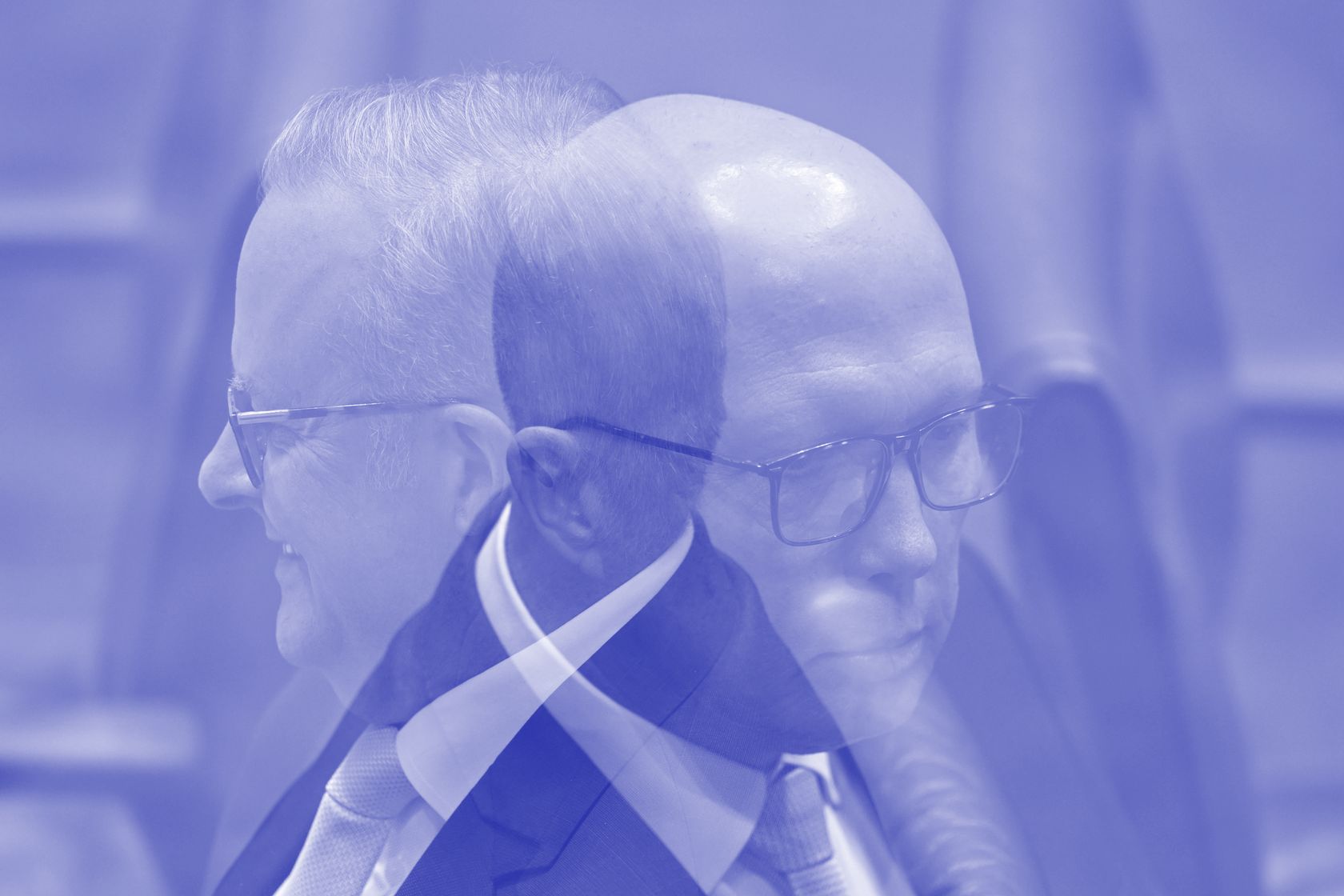
Dutton’s edge: Two weekend polls show the Coalition is on track to win the next election but fall short of a majority. A YouGov poll projects the Coalition at 73 seats (range: 65–80) and Labor at 66 (59–72), with a 78% chance of a hung parliament. A Redbridge poll shows the Coalition leading Labor 52–48 in key marginal seats, but likely not enough for a majority. Cost of living, housing and healthcare are top voter concerns, with Labor rated poorly and the Coalition only slightly better. YouGov polling suggests Labor could lose 15 seats, with its primary vote dropping to 29.1%, its lowest since the 1930s. Peter Dutton has ruled out working with the Greens but named independents Bob Katter and Dai Le as potential allies. Monique Ryan says she offered to work with Dutton, but he showed no interest. The election must be held by May 17. (Capital Brief)(Sunday Telegraph)(ABC)(The Guardian)(AFR)
2.
Rates watch: Economists and the market overwhelmingly expect the RBA to begin cutting rates when it meets on Tuesday for its first decision of 2025. Capital Brief reports the market is pricing in a 25-basis-point cut to 4.1%, driven by better-than-expected inflation and the RBA's dovish shift in December. Commonwealth Bank economists think this will be the first of several cuts, with one per quarter during 2025. Westpac has also forecast a quarter-point cut, bringing the cash rate to 3.35%. While HSBC chief economist Paul Bloxham said the case to cut “is not an unambiguously strong one,” he thinks there will be an easing. In other central bank news, Donald Trump’s top economic adviser, Kevin Hassett, said he’ll meet regularly with US Fed Chair Jerome Powell to exchange views, reviving a practice from Trump’s first term to ensure his views on the economy are heard. (Capital Brief)
3.
Chip wars: Taiwan Semiconductor Manufacturing Co (TSMC) and Broadcom are considering acquiring parts of Intel, potentially splitting the chipmaker’s operations, The Wall Street Journal reported citing unnamed sources. Broadcom is interested in Intel’s chip-design and marketing divisions, while TSMC is assessing its manufacturing plants, possibly through an investor consortium. Broadcom would only proceed if it secures a partner for Intel’s manufacturing arm, the journal said. The two companies are not collaborating, and talks remain preliminary. Interest in Intel has grown as it struggles to compete with semiconductor rivals amid the AI boom. A breakup would align it with the industry shift toward firms specialising in either manufacturing or design. It comes after former CEO Pat Gelsinger was ousted in December after failing to execute a turnaround plan. (Wall Street Journal)(Capital Brief)
4.
EU mobilises: Donald Trump’s push for Ukraine peace talks without European involvement triggered an emergency summit in Paris Monday, where French President Emmanuel Macron will meet selected European leaders, including UK Prime Minister Keir Starmer, German Chancellor Olaf Scholz, NATO Secretary General Mark Rutte, and European Commission President Ursula von der Leyen. The emergency meeting described as “consultation talks” follows Trump’s call with Russian President Vladimir Putin and his announcement that negotiations would begin immediately, stunning European allies. Trump’s Ukraine envoy, Keith Kellogg, said Europe would not be at the table, though US officials later insisted Ukraine would be included. US and Russian officials will meet in Saudi Arabia this week, with the Trump administration telling European officials it wants to secure a ceasefire in Ukraine by Easter, Bloomberg reported citing sources. Meanwhile, the US sent European governments a pointed questionnaire asking what security guarantees they could provide for Kyiv, Reuters reported. (Bloomberg)(Reuters)(AP)
5.
Gaza drums: US Secretary of State Marco Rubio met with Israeli Prime Minister Benjamin Netanyahu in Jerusalem, where he fully endorsed Israel’s war aims in Gaza, saying Hamas “must be eradicated.” His visit comes as Arab leaders reject President Donald Trump’s proposal to transfer Gaza’s Palestinian population and redevelop the territory under US ownership—an idea Netanyahu supports but international law experts call a war crime. The ceasefire remains fragile, with both sides accusing each other of violations. Hamas condemned an Israeli airstrike that killed three Palestinian police officers securing aid trucks, while Israel said it targeted armed individuals approaching its forces. US envoy Steve Witkoff told Fox News phase two ceasefire talks will continue this week. Meanwhile, Israel received a shipment of 2,000-pound bombs from the US after Trump lifted a previous hold on their delivery. Netanyahu has signalled readiness to resume fighting if Hamas does not release hostages. (AP)(Reuters)
6.
Chatbot ban: News Corp banned staff from using DeepSeek’s chatbot over security and privacy concerns. An internal memo viewed by Capital Brief says the decision came after its cybersecurity team conducted a review of the platform. “The News Corp Cyber Team has conducted an assessment of the DeepSeek Al Platform, and has increased concerns about its security and privacy risks,” the memo reads. The Chinese artificial intelligence platform faces increasing scrutiny from regulators and governments, with the Australian government banning the use of DeepSeek tech on federal devices earlier this month. News Corp’s global CEO Robert Thomson was an early critic of the threats and opportunities that generative AI poses to global media, and has accused AI firms of lifting content to train their large language models without paying for it. (Capital Brief)
7.
Court order: Uber is suing food delivery rival DoorDash for alleged anticompetitive practices that drive up costs for consumers and restaurants. The California lawsuit accuses DoorDash of coercing restaurants into exclusivity and threatening higher commission rates for working with competitors like Uber. Both companies operate marketplaces where consumers browse and order food, as well as offering direct delivery services for restaurant websites. Restaurants pay them for advertising and delivery, with DoorDash holding 63% of the US market in 2024, followed by Uber at 25%. The complaint alleges that DoorDash’s “abusive tactics” cost Uber millions in lost revenue. It describes DoorDash as a “monopolist” that has pressured restaurants to the point they feel they have a “gun to their head.” Uber is seeking unspecified damages. (Capital Brief)(California Superior Court filing)(Reuters)
8.
Allied tension: German Chancellor Olaf Scholz hit back at criticism levelled at Europe by US Vice President JD Vance during a heated speech at the Munich Security Conference on Friday. Scholz said Germany “will not accept outsiders interfering in favour of this party in our democracy, in our elections,” after Vance said that Europe itself had turned into a threat to democratic values. Leaders had been anticipating that Vance would give clarity on US involvement in Ukraine war and strengthening the transatlantic alliance. Instead, they were roundly attacked for suppressing free speech and failing to halt mass immigration. Speaking after Vance at the conference, German Defence Minister Boris Pistorius said: “He talks about annihilation of democracy and, if I understood him correctly, he compares the situation in certain parts of Europe to authoritarian regimes. Ladies and gentlemen, that is not acceptable.” (Financial Times)
