Trade war flares as Trump doubles Canada tariffs to 50%
Plus: Australia’s shock trade surplus weakens tariff exception plea; Ukraine agrees to US-backed ceasefire deal; Philippines ex-president Duterte detained on ICC warrant.

Good morning. Here's what happened overnight and what you need to know today.

1.
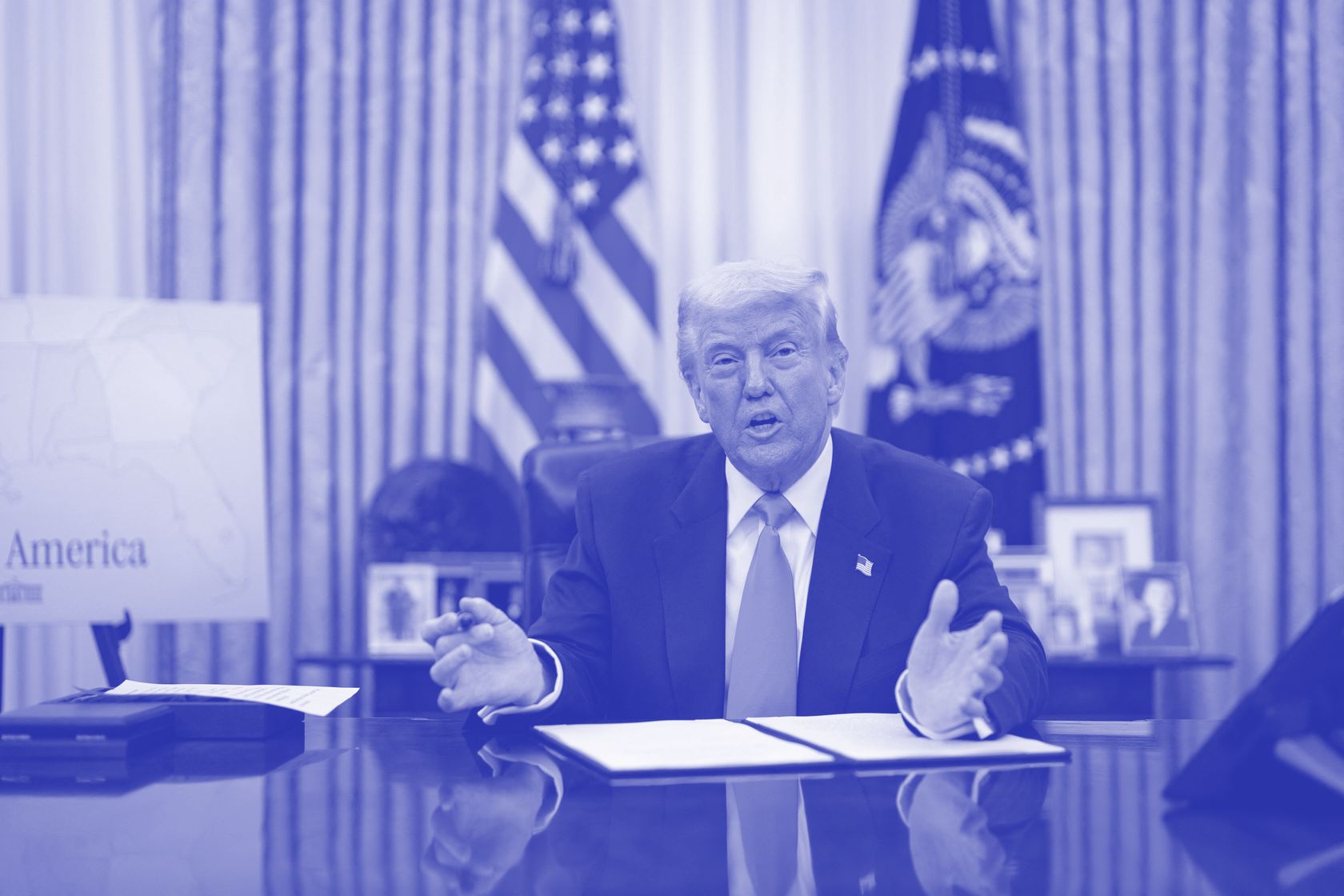
Border battle: US President Donald Trump is doubling tariffs on Canadian steel and aluminium from 25% to 50%, in response to Ontario’s new 25% surcharge on electricity exports to the US. The tariffs take effect on 12 March. He also threatened higher auto tariffs on 2 April, claiming it would "permanently shut down" Canada’s auto industry unless Canada drops "outrageous" tariffs on US dairy and other goods. Trump will declare a "national emergency on electricity" and again called for Canada to become the 51st US state. Canada’s incoming PM Mark Carney said the move was “an attack on Canadian workers, families and businesses,” vowing to keep tariffs on US goods “until Americans show us respect and make credible, reliable commitments to free and fair trade.” Markets remained volatile as economists worried Trump’s trade policies are fuelling inflation and recession fears. Meanwhile, Canadians staying in the US for over 30 days will soon face mandatory registration and fingerprinting, ABC News reported. (Capital Brief)(Donald Trump post)(Doug Ford post)
2.
Surplus twist: A surge in gold exports has given Australia its first monthly trade surplus with the US, undermining Prime Minister Anthony Albanese’s argument for an exemption from Trump’s 25% tariffs on steel and aluminium. JPMorgan economist Tom Kennedy noted Australia recorded an historic trade surplus with the US in January 2025, a deviation from the long-run trend, driven by a surge in gold exports. The Albanese government had argued that Australia should be spared from the tariffs because it usually runs a trade deficit with the US, a point Trump had acknowledged when saying an exemption was “under consideration.” But many, including former prime minister Malcolm Turnbull believe an exemption is “very unlikely.” Opposition Leader Peter Dutton has already blamed Albanese for not doing enough to secure a carve-out. Industry groups expect the tariffs to expand beyond metals to pharmaceuticals and agriculture. Kennedy said Australia’s trade balance with the US was likely to revert to deficit in the coming months. (AFR)(SMH)
3.
Ceasefire test: Ukraine has agreed to a US proposal for an immediate 30-day ceasefire in the war with Russia, subject to Russian acceptance, following talks in Saudi Arabia. The agreement prompted the Trump administration to pledge an immediate resumption of American military aid and intelligence sharing with Kyiv. US Secretary of State Marco Rubio said he would present the offer to Moscow, saying the ball is now in Moscow’s court. The US and Ukraine also committed to finalising a minerals deal that had been in limbo following an acrimonious Oval Office meeting between President Donald Trump and Ukrainian President Volodymyr Zelensky. Earlier, Ukraine had launched what has been reported as its largest drone strike on Russian territory since the war began, involving 343 drones across 10 regions. Russia responded with 126 drones and a ballistic missile. Russian officials accused Ukraine of targeting civilians, while Ukraine said it struck a major oil refinery. Russia has not signalled whether it will accept the ceasefire.(Reuters)(AFR)(Telegram)(Capital Brief)(WSJ)
4.
Duterte detained: Former Philippines president, Rodrigo Duterte, was arrested at Manila airport on Tuesday over killings carried out during his war on drugs. Police arrested Duterte after Interpol Manila received an arrest warrant issued by the International Criminal Court (ICC), accusing the former leader of crimes against humanity. The ICC launched a probe into Duterte’s war on drugs in 2021, investigating Duterte’s crackdown on narcotics beginning when he was mayor of Davao City in 1998, stretching to his time as President between 2016 and 2022. Human rights groups estimate that over 12,000 people were killed during Duterte’s presidential term. The crackdown targeted suspected drug dealers and users, and allowed police and state-backed vigilantes to carry out violent raids and alleged extrajudicial killings. Following the arrest, Duterte filed a petition asking the Supreme Court to halt enforcement of the ICC order, and reports are emerging that Duterte has been flown to The Hague. (Philippines Government statement)(WSJ)(Bloomberg)(Capital Brief)
5.
Boardroom scrutiny: Australian Securities and Investments Commission (ASIC) chair Joe Longo called for more tech expertise on corporate boards and more vigorous questioning of board management. Later today, Longo will announce the first meeting of ASIC's Regulatory Simplification Group, which Longo established in November. ASIC is expected to publish a discussion paper based on the group's work in Q3 2025. Longo will call for a diversity of expertise on boards, and that board members must support, but also question, management in the wake of recent "well-publicised issues." Some issues, many dealt with by ASIC, begin with poor personal behaviour “before turning into more serious corporate misconduct," Longo will say, in the wake of serious allegations including WiseTech founder Richard White and the regulator's ongoing lawsuit against former and current Star Entertainment Group executives and board members. ASIC has confirmed it is conducting preliminary inquiries into WiseTech. (Capital Brief)
6.
New chip: Meta is testing its first in-house chip for training AI systems as it seeks to become less reliant on external suppliers like Nvidia, according to sources cited by Reuters. Meta will increase production for wide scale use of the chip if the testing goes well. The sources explained that the chip is a “dedicated accelerator” which means it is designed to handle AI-specific tasks, making it more efficient than GPUs that are typically used for AI workloads. Partnering with Taiwan Semiconductor Manufacturing Co. to produce the chip, Meta intends to start using in-house chips by 2026. One of Nvidia’s biggest customers, Meta has spent billions on their GPUs to train its AI models, but the long-term value of GPUs has come into question since the emergence of low-cost models by DeepSeek. Meta plans to spend USD65 billion ($103.4 billion) on AI infrastructure in 2025. (Reuters)(Capital Brief)
7.
Jan JOLTS: US job openings rose in January, while layoffs fell and quits rose, suggesting market resilience as President Trump entered the White House. Available positions increased to 7.74 million from a revised 7.51 million reading in December. The hiring rate remained unchanged, while layoffs fell to 1% - their lowest rate since June 2024. The quits rate, which gauges the percentage of people leaving their roles voluntarily, rose to 2.1%. While the Job Openings and Labor Turnover Survey (JOLTS) data suggests resilience in the US labour market, the January figures lag behind more recent reports that Trump’s economic policies are increasing market unease. US unemployment claims rose to an almost three-year high in the week ending 22 February. Weakening employment data and increasing stock market anxiety could prompt the Federal Reserve to cut rates more than expected in 2025. The central bank is due to gather for a policy meeting next week. (Bureau of Labor Statistics)(Bloomberg)(Capital Brief)
8.
Fed frontrunner: Advisers to Donald Trump have indicated that Federal Reserve governor Michelle Bowman is the frontrunner to become the central bank’s top banking regulator, people familiar with the matter told The Wall Street Journal. Trump has not yet made a decision but said in a weekend Fox News interview that he would do so “fairly soon.” Bowman, a Republican appointed by Trump in 2018, has generally preferred higher interest rates and often opposed former Vice Chair for Supervision Michael Barr’s regulatory agenda. Barr stepped down last month, avoiding a potential legal and political battle. Some Republican lawmakers, frustrated by Fed Chair Jerome Powell’s influence over bank regulation, have pushed to fill the position quickly. If the position remains open, it could grant more autonomy on regulatory policy to whomever Trump selects as Fed chair next year. More than two dozen Republican lawmakers and banking trade groups have urged Treasury Secretary Scott Bessent to fill the position.(WSJ)
