Trump taps Kevin Warsh to succeed Powell as Fed chair
Plus: Silver, gold plummet after Fed pick; DOJ publishes millions of new Epstein files; Angus Taylor to challenge Opposition Leader Sussan Ley.

Good morning. Here's what happened overnight and what you need to know this weekend.

1.
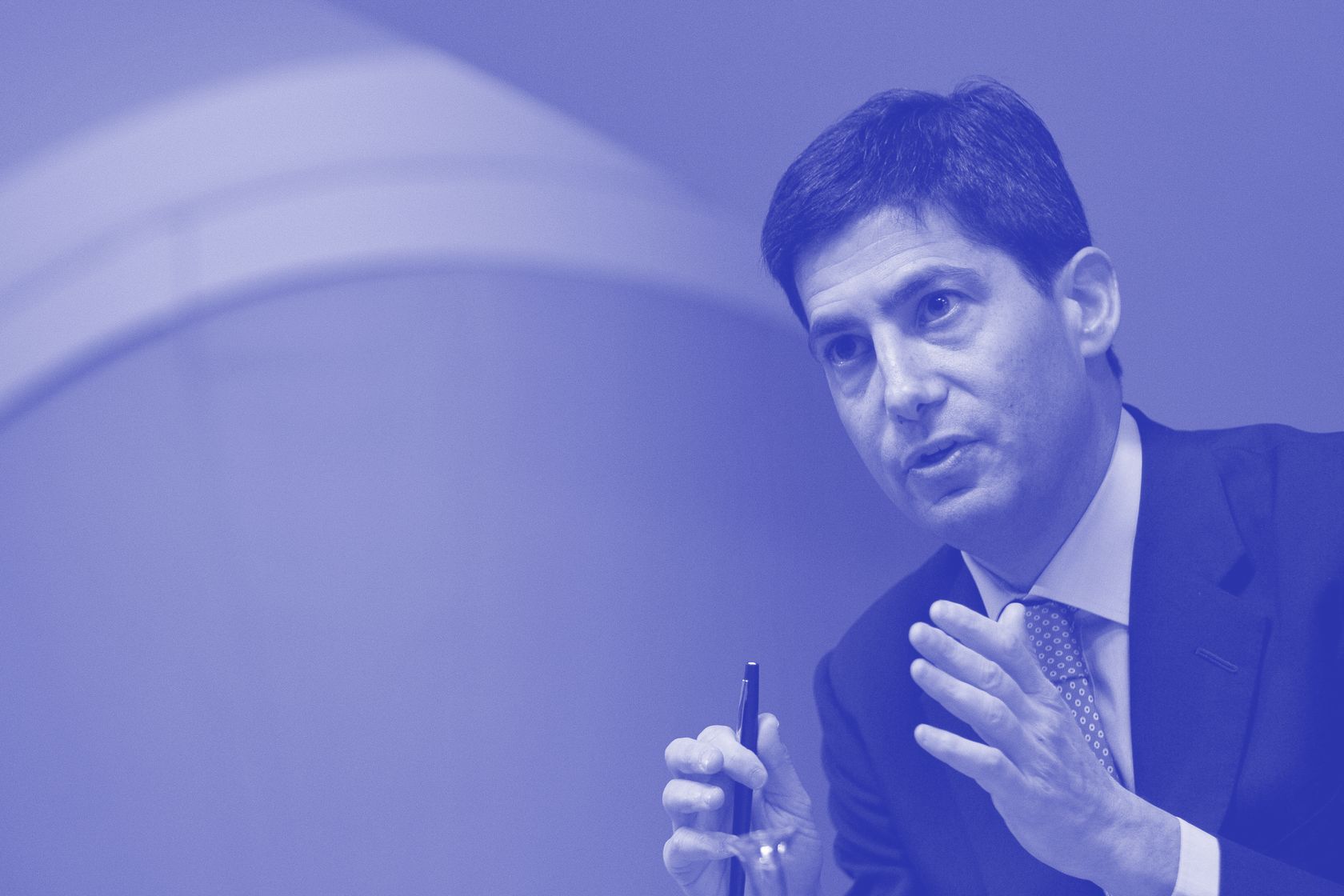
Don’s pick: US President Donald Trump nominated Kevin Warsh to succeed Jerome Powell when his term as US Federal Reserve chair ends in May. Making the announcement via a post on Truth Social on Friday, Trump wrote: “I have known Kevin for a long period of time, and have no doubt that he will go down as one of the GREAT Fed Chairmen, maybe the best. On top of everything else, he is ‘central casting,’ and he will never let you down.” Warsh served on the US central bank’s Board of Governors from 2006 to 2011, during the 2008 global financial crisis, and was passed over for the role in 2017 when Powell was tapped instead. During 2025, Warsh aligned himself more closely with Trump by pushing for lower interest rates, a shift from his reputation as an inflation hawk. Commenting on other potential candidates, Trump claimed that Kevin Hassett was too valuable as an adviser “to let him go.” Should Warsh be confirmed by the Senate, he will enter the role at a time when the central bank’s independence is viewed by economists and investors as being under threat. Republican Senator Thom Tillis said he will oppose the confirmation of any nominee “until the DOJ’s inquiry into Chairman Powell is fully and transparently resolved.” (Truth Social)(Capital Brief)(WSJ)(Bloomberg)(Politico)
2.
Silver plunge: Silver and gold plummeted on Friday while the US dollar strengthened after Trump nominated Kevin Warsh to become the next chair of the US Fed. The S&P 500 closed down 0.43%, the Dow Jones retreated 179 points, or 0.36%, while the Nasdaq dropped 0.94% to end the day at 23,461.82. The major indices headed for a positive January, with the S&P 500 and the Dow up 1.4% and 1.7% respectively, for the month, while Nasdaq posted a 1% gain. Silver futures tumbled 31% to USD78.53 ($112.78), its worst day since March 1980, while gold futures shed 11.4% to settle at USD4,745.10. The initial drops across precious metals were prompted by news of Warsh’s nomination, but picked up as the dollar spiked. Meanwhile, US oil giants Exxon Mobil and Chevron are up 15% and 14% respectively in January and are on track to post their largest monthly gains in more than three years.
3.
Epstein files: The US Department of Justice (DOJ) released a fresh tranche of files related to the late, disgraced financier Jeffrey Epstein on Friday. The batch of Epstein files includes over three million pages, more than 2,000 videos, and 180,000 images. “Today’s release marks the end of a very comprehensive document identification review process to ensure transparency to the American people and compliance with the Act,” deputy attorney general Todd Blanche said during a press conference. An FBI list of allegations related to President Donald Trump — many of which appear to have come from unverified tips — is among the new documents. The DOJ began releasing the documents in December after the Epstein Files Transparency Act was signed into law by Trump on 19 November. The DOJ missed the 19 December deadline to release all documents under review and did not explain redactions made throughout the files. Victims of Epstein have criticised the DOJ’s redactions and accused it of withholding material. Earlier Epstein file releases included mentions or images of Trump, Bill Clinton, Larry Summers, Bill Gates, filmmaker Woody Allen and Steve Bannon. (DOJ)(Bloomberg)(WSJ)(CNBC)(Reuters)(BBC)
4.
Hastie’s decision: Liberal MPs are pushing to resolve the party’s leadership crisis by Monday, allowing it to focus on an expected interest rate rise the following day. Backbencher Andrew Hastie confirmed on Friday he did not have the numbers to take the leadership, clearing the way for defence spokesman Angus Taylor to challenge Opposition Leader Sussan Ley. Ley narrowly defeated Taylor in a leadership ballot in May but has since struggled to assert her authority amid internal divisions and a surge in support for One Nation. Liberal MPs are due to gather for their weekly partyroom meeting on Tuesday, amid growing speculation that a move to spill the leadership is afoot. With the Reserve Bank expected to raise interest rates on Tuesday following stronger-than-anticipated inflation figures, multiple Liberal sources said there was a push to bring the meeting forward. “It’s time to stop the bleeding,” one Liberal MP, granted anonymity to speak freely, told Capital Brief. (Capital Brief)
5.
Behind the scenes: Nine Entertainment CEO Matthew Stanton revealed that the media company’s $850 million acquisition of digital billboard business QMS from private equity firm Quadrant was a year in the making and was already waved through by the competition regulator last year. The deal is part of a broader strategic refocus for the business, and coincides with the $56 million sale of Nine Radio to billionaire pub-owner Arthur Laundy and the $15 million sale of regional news station NBN Television to Nine’s largest shareholder WIN Corp. Shareholders reacted positively to the news, with shares closing 5% higher. Stanton told analysts on Friday that the QMS acquisition from Quadrant Private Equity has not been something “off the cuff we’re trying to do, this has been a year of work through”. When asked by an analyst whether people should be sceptical about a purchase from private equity, Stanton said Nine has done “a hell of a lot of due diligence”. (Capital Brief)
6.
Brain drain: Apple Inc lost at least four of its AI researchers in recent weeks, as well as a top Siri executive, as the staff shifted to rival employers including Meta and Google DeepMind, according to sources cited by Bloomberg. The latest departures include Yinfei Yang, Haoxuan You, Bailin Wang and Zirui Wang. Yang left to start a new company, while You and Bailin Wang joined Meta, sources said. You left for Meta’s Superintelligence research arm, and Bailin Wang is working on Meta recommendations. The defections are a hit to Apple’s AI efforts, as the tech giant struggles to keep pace with peers. Apple’s decision to outsource some technology to Alphabet Inc’s Google has frustrated staff, particularly across its AI division. While Apple reported bumper earnings for the first quarter this week on the back of “unprecedented demand” for iPhones during the period, its AI challenges remain an overhang. (Bloomberg)
7.
Rich-Lister arrested: Tech billionaire Laurence Escalante temporarily stepped down from his role as chief executive of his gaming company Virtual Gaming Worlds (VGW), the AFR reported, after being charged with family violence, drugs and burglary offences. The 44-year-old Perth-based entrepreneur is accused of unlawfully entering the home of a 24-year-old woman at her Perth home on Australia Day. Some of the charges against him relate to "alleged serious family violence incidents that occurred between June 2025 and January 2026", police said. Prosecutors alleged that the woman had been in a relationship with Escalante for 12 months before it ended in December. Escalante founded VGW in 2010 and is now estimated to be worth more than $4.5 billion. The AFR reported that VGW released a statement confirming that Escalante would take a leave of absence. Escalante denies the allegations. (AFR)(ABC)(SMH)
8.
Cash splash: State premiers and Prime Minister Anthony Albanese sealed a new five-year hospital funding deal, injecting an extra $25 billion into state coffers to help them cope with increasing pressure on aged care and the Commonwealth’s moves to reduce spending growth in the National Disability Insurance Scheme (NDIS). The PM said the Commonwealth has increased its earlier offer of about $21 billion in extra funding by $4 billion. He told reporters the additional funding came on top of his government’s extra investments in Medicare Urgent Care Clinics and other enhancements to the Medicare system, including cheaper medicine. Commonwealth funding for state public hospitals will hit $219.6 billion from 2026-27 to 2030-31. National cabinet also agreed to NDIS reforms, including to limit annual cost increases to 5-6% and adjusting the state and territory contribution escalation rates to actual scheme growth with an 8% cap from 1 July 2028. Government sources told The Australian that the move will see states have “more skin in the game”. (Capital Brief)(The Australian)(AFR)(ABC)
