US stocks snap six-day rally on debt concerns
Plus: UK halts Israel trade talks over Gaza offensive, sanctions settlers; Musk to cut political donations, stay Tesla CEO “unless I die"; CATL surges in HK’s biggest 2025 IPO.

Good morning. Here's what happened overnight and what you need to know today.

1.
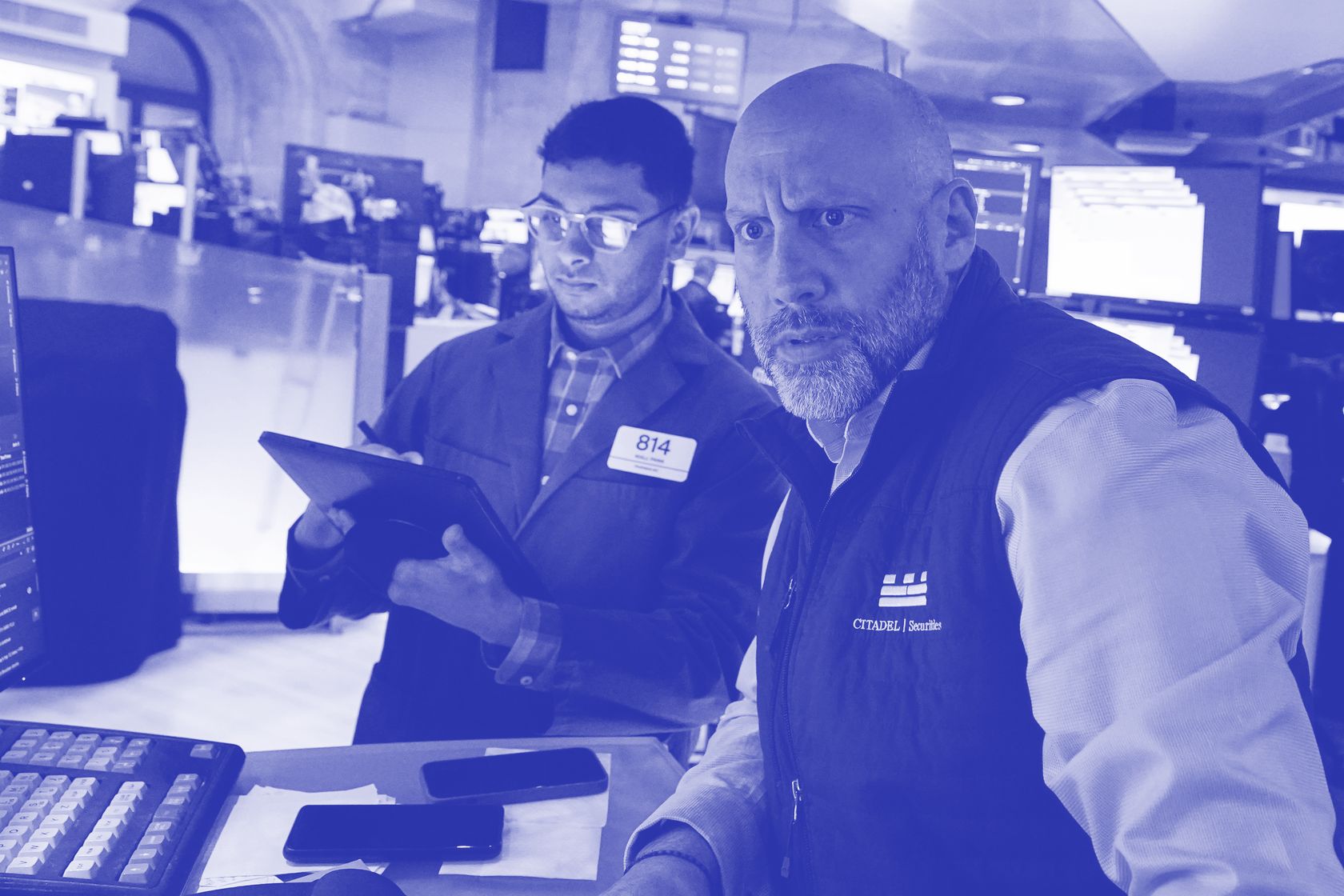
Rally pause: A slide in US stocks accelerated Tuesday, ending the S&P 500’s six-day winning streak, as rising Treasury yields and declines in technology and communication stocks weighed on markets. Alphabet, Amazon, Apple and Nvidia were all lower, while Tesla rose after Elon Musk said he expects to remain CEO for five more years. The 10-year Treasury yield climbed to 4.481% after lawmakers advanced a tax-and-spending bill projected to add USD3–USD5 trillion to the USD36.2 trillion federal debt, and following a Moody’s downgrade. Home Depot fell despite beating Q1 sales estimates and reaffirming full-year guidance, saying it will hold most prices steady while shifting production out of China. It warned, however, some products may disappear from shelves. Elsewhere, Google launched “AI mode” in US search and announced a USD249.99/month subscription for advanced tools. Alphabet shares fell over 1%. (Bloomberg)(Reuters)
2.
Gaza backlash: The UK has paused free trade talks with Israel, summoned its ambassador and imposed further sanctions on West Bank settlers, as Foreign Secretary David Lammy condemned a “monstrous” military escalation in Gaza. Lammy described the offensive as a “dark new phase in this conflict” and labelled Israeli Finance Minister Bezalel Smotrich’s remarks on “cleansing” Gaza and relocating residents “extremist”, “dangerous”, “repellent” and “monstrous”. Prime Minister Keir Starmer called the escalation “utterly intolerable” and criticised Israel’s plan to allow only a “basic” quantity of aid as “totally and utterly inadequate”. The UK also sanctioned individuals and groups linked to settler violence. Israel said the trade talks, launched in 2022, had stalled and called the sanctions “puzzling” and “unjustified”. Israeli Opposition leader Yair Golan warned Israel risked becoming a “pariah state”. It comes a day after the UK, France and Canada made a joint statement threatening to take ”concrete actions” if Israel doesn’t stop its current military offensive. (Capital Brief)(FT)(Reuters)(WSJ)
3.
To the grave: At the Qatar Economic Forum, Elon Musk said he plans to scale back political donations, a blow to Republicans ahead of the 2026 mid-terms. Musk gave about USD250 million ($390.7 million) to political groups in 2024—more than any other donor. He told the forum he expects to remain Tesla CEO in five years “unless I die,” and that he will proceed with his lawsuit against OpenAI. Meanwhile, South Africa will allow Musk’s Starlink to operate under alternative rules to its Black ownership laws, aiming to ease tensions with Musk and the US. Bloomberg reports the move seeks to defuse criticism from Musk and Donald Trump, who have promoted a conspiracy theory about a genocide against White people in South Africa. The country will apply so-called Equity Equivalent rules in place of Black Economic Empowerment requirements, which mandate 30% Black ownership. (Bloomberg)(Bloomberg)(Reuters)(WSJ)
4.
Battery rush: Robin Zeng, the billionaire founder and chairman of Contemporary Amperex Technology Co. Ltd (CATL), slammed US accusations that the Chinese battery giant’s tech poses a threat to national security. Zeng told Bloomberg that CATL has never sold any of its products to the military and that “The accusation is completely groundless.” The comments follow CATL’s blockbuster Hong Kong listing on Monday, the biggest this year, with shares surging as much as 17% to HK$307.6 ($61.42) on its debut, before closing up 16% at HK$306, giving the group a market capitalisation of HK$1.3 trillion. Much of the funds raised in the listing will support its expansion in Europe, particularly in Hungary where it plans to invest more than €7 billion building a second battery factory in the continent. (Bloomberg)(Capital Brief)(FT)(HK Stock Exchange)
5.
Split decision: The Liberals and Nationals failed to secure an agreement to maintain the Coalition on Monday, prompting the first split in decades. Nationals leader David Littleproud insisted he is “passionate in the belief” the Coalition can be revived after the policy-driven split, but flagged that the party would not budge over key demands for divestiture powers, support for nuclear energy and the regional Australia Future Fund. Liberal leader Sussan Ley has hit out at Littleproud's "disappointing" decision to split from her party, saying Coalition agreements should be focused on the makeup of the frontbench and not specific policies. Ley reportedly does not intend to re-form a Coalition with Littleproud before the 2028 election, telling the ABC that the Coalition agreement should be held “hostage” over policy. Asked if the Liberals and Nationals would go to the next election without a Coalition pact, Littleproud said: “If we can’t get to an agreement, yes, that’s the case.” (Capital Brief)(Capital Brief)(Capital Brief)(The Australian)(ABC)
6.
Bank job: Westpac is planning to axe over 1,500 roles as part of the bank’s largest redundancy round in over 10 years, as CEO Anthony Miller pushes to reach cost reduction targets, according to sources cited by the AFR. The business is undergoing an ambitious overhaul, referred to as ‘Unite,’ with Miller asking managers to slash headcount by 5% across most teams in the coming months. A 5% headcount reduction would amount to roughly 1,700 in staff cuts. This would be in addition to the 900 full time positions which were cut in the previous financial year. Sources told the AFR that employees working on the Unite program, which is focused on reducing Westpac’s long-term cost base, will not be let go. Earlier this month, Westpac shares tumbled on disappointing half-year results, posting a slip in profit as higher expenses and hedging-related impairments offset growth in lending and deposits. (AFR)(Capital Brief)
7.
Gas export: Japan resold between 627 and 812 petajoules of Australian liquefied natural gas to other Asian countries in 2024—up to 1.6 times eastern Australia’s annual gas use—according to the Institute for Energy Economics and Financial Analysis. Australia supplied 41% of Japanese-chartered LNG cargos resold last year, worth $11 billion to $14 billion, mostly from Gorgon, Wheatstone and the North West Shelf in Western Australia. Queensland volumes resold equalled nearly two-thirds of its LNG sales to Japan. The data has sharpened scrutiny over offshore profits as domestic users face record prices and tightening supply. Separately, the Native Title Tribunal approved Santos’ $3.6 billion Narrabri gas project, ruling its importance to national energy reliability outweighed environmental and cultural concerns. The decision ends a decade-long battle over plans to drill up to 850 coal-seam gas wells in north-western NSW and found the project would have a “net public benefit” if all gas is supplied to the domestic market. (AFR)
8.
Shadow fleet: The European Union and Britain announced new sanctions against Russia on Tuesday over the war in Ukraine, without waiting for the US to join them. EU foreign policy chief Kaja Kallas said that the EU’s 17th sanctions package against Russia will target Moscow’s almost 200-strong shadow fleet of oil tankers, Russia’s human rights violations and hybrid threats. "More sanctions on Russia are in the works. The longer Russia wages war, the tougher our response," Kallas added. In parallel, the EU is working on its 18th package of Russian sanctions in efforts to ratchet up pressure on Moscow to end its war against Ukraine. The new penalties could include sanctioning banks in third countries which support Russia’s defence industry and lowering a G7 price cap on Russian oil. The move follows Trump’s Monday call with Putin which failed to result in a ceasefire agreement between the two countries. (Capital Brief)(Kaja Kallas X)(Reuters)(Bloomberg)
