Wall St closes best quarter since 2020
Plus: US Supreme Court rejects Trump’s birthright citizenship order; Australian home values post steepest monthly fall since 2022; Anthropic launches Claude Science model.


Good morning. Here’s what happened overnight and what you need to know today.
1.
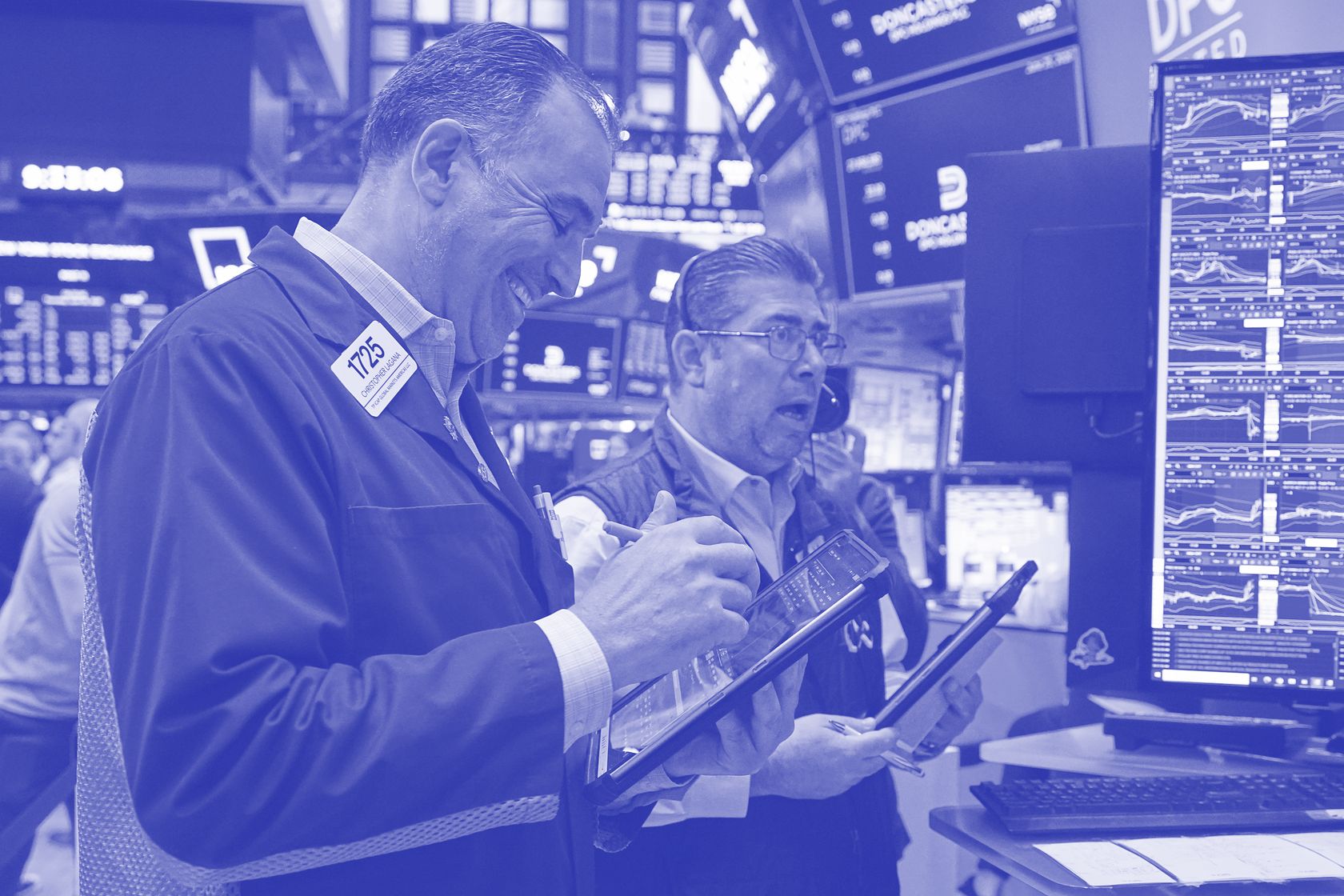
Quarter past: The ASX is set to edge higher this morning after Wall Street capped its best quarter since 2020, with US tech stocks drawing dip-buyers overnight. ASX 200 futures were up 0.1% near 5.45am AEST, following the local market’s 2.8% return for FY26. That was its weakest financial-year showing since 2022, as Australia’s lack of exposure to the AI rally left it trailing global peers for a fourth straight year. The S&P 500 rose 0.79% and the Nasdaq added 1.52%, sealing quarterly gains of roughly 14% and 20% respectively. Optimism over signs of progress toward ending the Iran war has supported stocks, though a Qatari official said overnight that US envoys in Doha would not hold a high-level meeting with Iran. The surge has stirred bubble fears, with BofA’s risk indicator flashing for chips and tech, though strategists note sentiment is not yet at the extremes that signal danger. Meanwhile, a consortium of more than 140 financial and technology giants, including Visa, Mastercard, Stripe, BlackRock, Google and Klarna, unveiled Open USD, a shared, dollar-backed stablecoin governed by its members rather than a single issuer, sending Circle shares down as much as 15%. (Bloomberg)(Reuters)(Bloomberg)(WSJ)
2.
Born American: The US Supreme Court struck down Donald Trump’s order curtailing birthright citizenship, rejecting one of the US president’s signature immigration policies in a 6-3 ruling. The court found an executive order Trump issued on the first day of his second term could not be squared with the Constitution’s 14th Amendment, which has long been understood to guarantee citizenship to virtually everyone born on US soil. The order sought to deny citizenship to children born in the US if neither parent was a citizen or legal permanent resident, affecting an estimated 250,000 children a year, according to Bloomberg. “Citizenship, then and now, was the right to have rights — to freely participate in our political community,” Chief Justice John Roberts wrote for the court. “The Framers of the Fourteenth Amendment extended that promise to every free-born person in this land. We keep that promise today.” Only five ruled against Trump on constitutional grounds. Justice Brett Kavanaugh concurred in the result but said the order violated federal law first enacted in 1940, not the Constitution. Justices Clarence Thomas, Samuel Alito and Neil Gorsuch dissented. The order, blocked by lower courts, never took effect. It was the third time this year the court has invalidated a signature Trump initiative, after striking down his global tariffs in February and blocking him from removing a Federal Reserve governor at will yesterday. (Capital Brief)
3.
One-way no more: Home values recorded their steepest fall in three and a half years in June, as higher borrowing costs and a deliberate government push to cool investor demand finally bit. Cotality data showed the long Australian property boom has turned, with its national index slipping 0.4% in the biggest monthly drop since December 2022. Revisions to earlier months suggest prices actually peaked back in March. Sydney is leading the retreat, down 1.2% in June, with Melbourne close behind. Even the mid-sized capitals that had been powering ahead (Perth, Brisbane, Adelaide) have abruptly slowed. The reversal follows years in which housing was largely a one-way bet. Some is by design, with Labor last week passing laws curbing tax breaks for investors in existing homes, aiming to tilt the field back toward first-time buyers. “Even before interest rates rose by seventy-five basis points, we were seeing affordability hurdles weighing on buyer demand,” Cotality’s Tim Lawless said, citing cost-of-living strain, “deeply pessimistic sentiment” and the budget changes. For locked-out younger Australians, a sustained slide could be the opening they’ve waited for. The risk is it goes too far. Falling prices erode the paper wealth homeowners spend against, and the RBA has flagged a “potentially material weakening” that could drag on the wider economy. (Capital Brief)(Bloomberg)(AFR)
4.
Lab partner: Anthropic launched Claude Science, an AI research workbench aimed at scientists and pharmaceutical groups, as the IPO-bound company seeks to expand its enterprise business and lift revenue. The product can automate biology and chemistry tasks such as predicting protein structures, and brings together more than 60 scientific databases alongside coding tools, compute and research workflows in one workspace. “Every output carries an auditable history of how it was made, so you can validate and reproduce the results,” Anthropic said. “And a reviewer agent checks citations and calculations, flagging and correcting errors.” The release comes as Anthropic’s rapid push into automating professional work has unsettled markets, having helped trigger a USD1 trillion stock rout. Speaking to the FT, CEO Dario Amodei also said society underestimates the risks AI poses to biology compared with cybersecurity, and suggested only vetted individuals or companies should be able to use powerful biological models with dangerous applications. Claude Science runs on existing models without advanced biology capabilities, but Anthropic plans a trusted-access programme for its riskier Mythos and Fable models, the FT said.(Anthropic)(FT)(Bloomberg)
5.
‘Absolute shocker’: TPG Capital faces an uncomfortable decision over the future of its top Australian (and regional) dealmaker Joel Thickins after he was convicted of negligent driving and twice refusing a breath test. The local arm reports into the Nasdaq-listed TPG in the US, which is surely weighing how the conviction affects its franchise, with the firm saying it would communicate with stakeholders in coming days “as to the broader path forward". As he waited to be sentenced, Thickins kept things light. He even reportedly quipped with his lawyer after a stranger complimented his fragrance that it was “better than smelling like fear", according to the SMH. He was fined $1,430 and disqualified from driving for nine months over the five-car crash he caused in Sydney’s eastern suburbs on 1 June. Judge Michael Barko lashed his conduct as “indignant, argumentative and obstinate”, saying that, short of “maiming someone or killing someone, it can’t get much worse” and calling the scene “an absolute shocker”. TPG said a third-party investigation into the collision and a set of unrelated allegations that emerged days later had found those allegations “entirely without merit”. The AFR had reported that the allegations concerned a confidential, multimillion-dollar pay deal that bought the silence of Novotech’s former CFO and ex-TPG executive Rob Speedie. (Capital Brief)(AFR)
6.
Sugar hit: The ASX reporting season starts in about a month. The mood around the market has been gloomy in the context of the Iran conflict and rising rates. But underneath that, one thing is quietly pumping up company earnings, the enormous amount of money being spent globally to build AI infrastructure. And Macquarie strategists say the companies cashing in aren’t the ones using AI, they are the ones supplying the build-out. The bank calls them “AI enablers” — the data centre operators (NextDC), property (Goodman), and especially miners, because all that construction needs power, copper, uranium, rare earths. “AI enablers had the best earnings trends in February, and we think that could be repeated in August,” Macquarie’s Matt Brooks wrote in a note this week. The longer-term picture may be less rosy though. Pitt Street Research equity analyst Charlie Youlden told Capital Brief the near-term earnings will be “quite fine” for companies in the data centre trend, but warned that when the cycle starts to slow down, the US hyperscalers will curb their current outlays. “That’s when the real trouble begins,” he said. (Capital Brief)
7.
Another scandal: Greens Senator Barbara Pocock has seized on the latest troubling incident involving a “big four” firm to urge the federal government to impose further regulation on the sector. Pocock, one of consulting’s fiercest critics in Parliament who has previously called for the big four to be forced to separate their accounting and auditing arms and banned from government work, said Labor must act in response to the latest scandal, this time involving EY. “Another day, another scandal at the Big 4, where ethics are optional, rules are self-made, and accountability is dodged,” Pocock said. “First PwC, then KPMG, now EY. The Big [Four] have lost their social licence. Australians have had enough of the repeated scandals. It’s time for Labor to regulate the Big 4.” Her intervention follows EY’s dismissal on Tuesday of a graduate who allegedly accessed Prime Minister Anthony Albanese’s bank account while on secondment to the Commonwealth Bank. Both the graduate and another individual who was not an EY employee were charged on the same day. The incident was first reported by the AFR. (Capital Brief)
8.
Hearing Apple: The US Supreme Court also agreed to hear Apple’s appeal of a contempt ruling in its long-running antitrust battle with Fortnite-maker Epic Games. In a brief order overnight, the justices said they will review lower-court decisions that found the iPhone-maker willfully defied a 2021 ruling over developer fees for its App Store. The dispute dates to Epic’s 2020 lawsuit. While Apple specifically mostly defeated that case, Judge Yvonne Gonzalez Rogers ordered it to let developers direct users to cheaper payment options online. Apple complied but imposed a new 27% commission on revenue generated that way, which Epic said flouted the original injunction. Rogers found Apple in contempt in 2025, and the 9th Circuit upheld that finding in December. Apple contends it cannot be held in contempt for violating the “spirit” of an injunction rather than an express provision, and has denied breaching any court orders. “This is an important question of law, and we are pleased the Supreme Court will hear our case,” Apple said in a statement. The court declined to take up Apple’s separate challenge to the injunction’s worldwide scope. (Bloomberg)(Reuters)
