Wall Street tumbles on tariff shockwave
Plus: WTO forecasts tariffs to reverse trade growth to near zero in 2025; China demands respect as Trump moves to box it in; Second leaders’ debate marked by stumbles and slips.

Good morning. Here's what happened overnight and what you need to know today.

1.
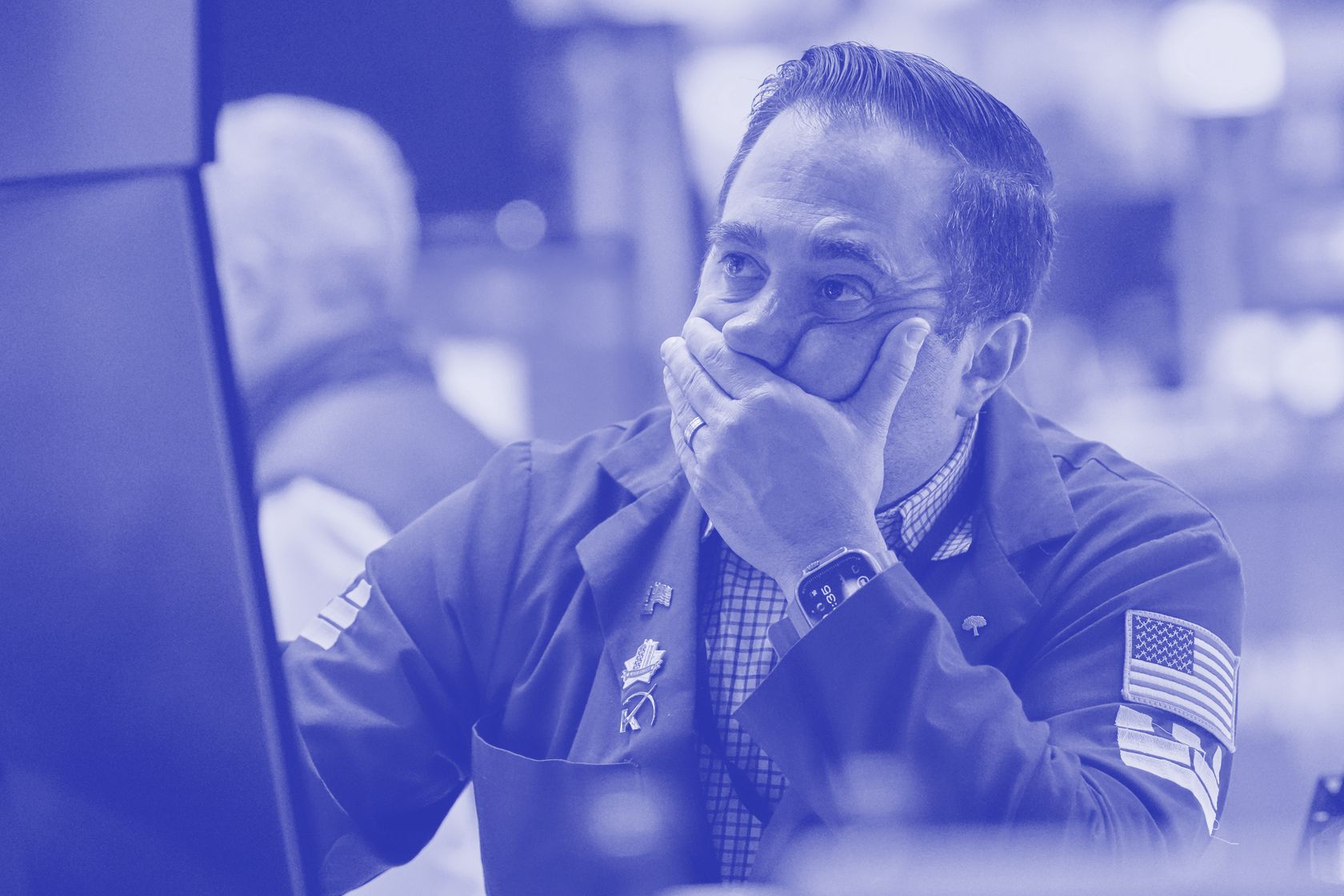
Tariff tremors: Global stock markets fell as fresh US export curbs on chipmakers, a downgraded global trade forecast, and Federal Reserve caution triggered a broad sell-off. The Nasdaq 100 dropped 3.1%, the S&P 500 fell 2.2%, and the Dow 1.7% after Nvidia (down 6.9%) warned of a USD5.5 billion charge tied to new US restrictions on its H20 chip exports to China. ASML flagged weaker orders and rising tariff-related uncertainty. The WTO cut its 2025 forecast, saying trade would decline by 0.2%, nearly three percentage points lower than without Trump’s tariffs. Fed Chair Jerome Powell, meanwhile, said the US economy is likely moving away from the central bank’s goals of keeping prices and unemployment in check, and warned tariffs may cause a “persistent rise in inflation.” He said the Fed is “well positioned to wait for greater clarity.” Gold hit a record high, bond yields fell and the dollar weakened as investors turned to haven assets. US March retail sales rose 1.4%, driven by pre-tariff buying. (WSJ)(Reuters)
2.
Trade maths: The World Trade Organization slashed its 2025 trade forecasts, warning Trump’s tariffs will push global goods trade into decline instead of the previously expected growth. The WTO now expects a 0.2% drop in merchandise trade, down from a 2.7% growth forecast, citing US tariffs including a 10% rate on most imports and 145% on Chinese goods. North America faces the steepest fall in goods traded, with USMCA exports set to drop 12.6% and imports 9.6%. If reciprocal tariffs return and countries retaliate, global trade could shrink by 1.5%. US-China trade is forecast to fall 81%. Services trade is expected to grow 4% in 2025, down from 6.8% in 2024. WTO chief Ngozi Okonjo-Iweala warned of “geopolitical fragmentation” and highlighted risks to poor countries. She acknowledged US concerns over market reliance and called for more diversified production, noting current concentration in semiconductors and vaccine exports undermines global resilience. (WTO)(Capital Brief)(FT)
3.
Beijing game: China said it is open to trade talks with the US but only if the Trump administration shows respect, reins in disparaging remarks by cabinet members, adopts a consistent position, and addresses Chinese concerns around sanctions and Taiwan. Beijing also wants the US to appoint a point person with Trump’s backing ahead of a potential summit with Xi Jinping. Meanwhile, Bloomberg reported the Trump administration is preparing to pressure nations to curb trade with China in negotiations over US tariffs. As tensions escalate, Chinese refiners have slashed US oil imports by about 90% and are importing record volumes from Canada. New data showed China’s Q1 GDP topped estimates at 5.4%, but leading banks have downgraded its growth outlook due to the trade war. Meanwhile, Trump unexpectedly said he would personally attend tariff talks with Japanese officials, which Tokyo had hoped to keep focused on trade and investment. (Bloomberg)(Capital Brief)
4.
Second showdown: In their second election campaign showdown, Anthony Albanese and Peter Dutton took to the ABC studios to spar on topics from cheaper childcare to the country’s nuclear plans. Debate highlights included Dutton conceding he made a mistake in alleging that Indonesian President Prabowo Subianto had declared that Russia had submitted a request to establish an air force base in his country. Russia’s ambassador to Indonesia has since defended its military ties and blasted Australia for its plans to deploy US missiles and its AUKUS partnership. Albanese’s most awkward debate moment came when he denied his government had requested Treasury to cost changes to negative gearing and the capital gains discount, when it in fact did exactly that last year. The latest Freshwater poll shows the major parties tied at 50% apiece on the two-party-preferred vote. Dutton has dropped 4 percentage points as preferred prime minister, giving Albanese the clear lead of 46% to 41%. (Capital Brief)(AFR)
5.
Tariff buying: A dash to dealers drove US retail sales to their biggest jump in over two years, as consumers rushed in to make vehicle purchases before the Trump administration’s 25% auto tariffs. Retail sales for March increased 1.4% after an unrevised 0.2% rise in February. Excluding autos, sales climbed 0.5%. The tariffs, which take effect in May, are set to dramatically increase the sticker price on cars. Tariff drama has also made its way into US housing, with the 30-year mortgage rate climbing last week by the most since October, as volatility in the Treasury market caused a pullback in financing applications for home purchases and refinancing. Across the pond, UK inflation figures for March slowed more than expected, offering temporary relief for the Bank of England as the country prepares for the economic fallout of trade tariffs. The UK’s headline inflation rose by 2.6% in the 12 months to March, down from 2.8% in the 12 months to February. The figures came in below economists’ 2.7% forecasts. (Capital Brief)( US Census Bureau)(MBA)(ONS)
6.
East coast rebellion: California Governor Gavin Newsom said the most populous US state will file a lawsuit challenging Trump’s authority to impose sweeping tariffs that have prompted a global trade war. The suit will claim that Trump's use of the International Emergency Economic Powers Act (which enables a president to freeze and block transactions in response to foreign threats) to impose tariffs on Mexico, Canada and China or a 10% tariff on all imports is unlawful. The suit will also argue that enacting such tariffs requires approval from Congress. "President Trump's unlawful tariffs are wreaking chaos on California families, businesses, and our economy — driving up prices and threatening jobs," Newsom said. The state accounts for around 14% of the nation’s GDP and would be one of the world’s biggest economies if it were an independent country. Earlier this week the Governor asked countries to exempt California’s exports from tariffs. (FT)(AP)
7.
Gender judged: Britain’s Supreme Court ruled the legal definition of “woman” under the Equality Act 2010 refers to “biological sex,” excluding transgender women, even those with Gender Recognition Certificates. The judges said interpreting “sex” as certificated sex would “cut across the definitions of ‘man’ and ‘woman’... in an incoherent way.” Reading the judgement, Lord Hodge said it “does not cause disadvantage to trans people,” as they remain protected under the Act’s provision for “gender reassignment,” though transgender women may be excluded from single-sex spaces such as changing rooms if “proportionate.” The ruling followed a challenge by activist group For Women Scotland to Scottish guidance that included trans women in public board quotas. The decision comes as Donald Trump rolls back trans rights and diversity policies in the US. In Australia, people have been able to select “male,” “female” or “X” on official forms since 2013, while Germany that same year passed a law allowing parents to leave a child’s gender blank on birth certificates. (Capital Brief)(UK Supreme Court's judgement)(WSJ)(The Guardian)(NYT)
8.
Rate pause: The Bank of Canada held its key policy rate at 2.75% amid US tariff uncertainty, its first pause after seven consecutive cuts, and said it was prepared to act “decisively” if incoming information “points clearly in one direction.” Governor Tiff Macklem said the bank would be “less forward-looking than usual until the situation is clearer,” citing uncertainty around US tariffs. For the first time since the pandemic, the bank scrapped its quarterly forecast, offering two scenarios: one where most tariffs are withdrawn and inflation dips to 1.5%, and another where a global trade war triggers a year-long “significant recession” and inflation peaks at 3.5% by mid-2026. Macklem said rate policy can’t resolve trade issues but must ensure price stability. Trump’s 25% tariffs on Canadian-made automobiles, steel, aluminium and goods deemed noncompliant with the US-Mexico-Canada trade treaty have raised inflation expectations and dented business investment. The bank expects weaker Q2 GDP after forecasting 1.8% growth in Q1. (Capital Brief)(BoC release)(WSJ)(Bloomberg)
