Iran seizes ships in Hormuz as peace talks dead in water
Plus: Wall St ignores war, cheers earnings to hit records; Canada’s TMX snaps up ASX’s only rival Cboe; Westpac axes whole division in new restructure.

Good morning. Here’s what happened overnight and what you need to know today.
1.
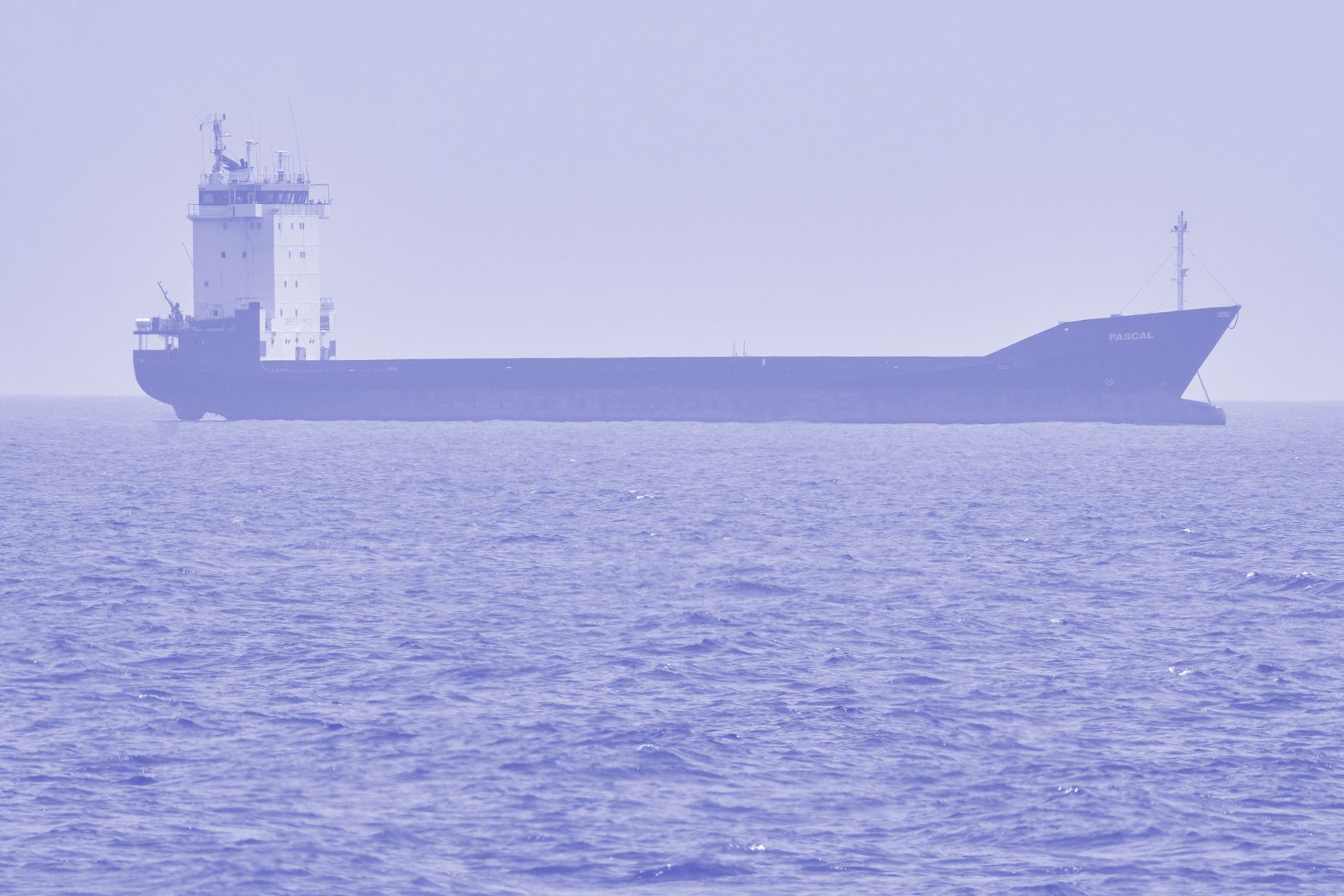
Iran war: Iran seized two cargo ships in the Strait of Hormuz and fired on a third on Wednesday local time, hours after US President Donald Trump indefinitely extended a ceasefire with Tehran, leaving the critical oil chokepoint under contested control with no peace talks in sight. Iran’s Revolutionary Guards said the MSC Francesca and the Epaminondas were detained for operating without permits and tampering with navigation systems. A third vessel, the Euphoria, was fired upon but later passed through the strait, the NYT reported citing tracking data from maritime data firm Kpler showing it was in the Gulf of Oman. The International Maritime Organization condemned the seizures as “unacceptable,” warning the situation remained “extremely volatile.” Iran’s parliament speaker said reopening Hormuz was “impossible” while the US naval blockade continued. The WSJ reported Trump would only give Iran a few days to submit a peace plan, citing unnamed US officials. Meanwhile, Reuters reported traders placed USD430 million in bets on falling oil prices just 15 minutes before Trump’s ceasefire announcement yesterday in the fourth such well-timed wager since the war began, with bets across all four incidents totalling approximately USD2.6 billion. Elsewhere, Russia said it would halt Kazakh crude flows to Germany’s PCK Schwedt refinery via the Druzhba pipeline from 1 May, in a move a senior Kazakh government official told the FT was primarily aimed at putting pressure on the EU, and specifically Germany, the largest arms supplier to Kyiv. The pipeline accounts for 17% of the refinery’s supply, which provides most of Berlin’s fuel. (Capital Brief)(FT)(Bloomberg)(AP)(NYT)
2.
Fresh competition: Toronto Stock Exchange owner TMX Group agreed to buy Cboe’s Australian and Canadian exchanges for USD300 million ($419 million), turning the Canadian company into the main challenger to the ASX’s dominance of local capital markets. Cboe Australia holds around 20% of Australia’s equity market trading and, after receiving a listing licence from ASIC last year, had flagged plans to launch an IPO market in 2026. ASIC last night said it would expedite its assessment of the acquisition. “(This deal) allows us to build into a new market on the other side of the world that happens to be the second strongest mining resource market in the world. So it is such a strong, natural fit for us,” TMX CEO John McKenzie told Reuters referring to Australia’s position in the global mining industry. The two units generated combined revenue of approximately CAD87 million and adjusted EBITDA of around CAD25 million in 2025. Canaccord Genuity and Macquarie Capital advised TMX, while Barclays advised Cboe. The deal, which remains subject to regulatory approvals, marks the second acquisition of an Australian exchange by a Canadian company in a year, after the Canadian Securities Exchange bought NSX Ltd in October. (Capital Brief)(TMX Group)(Cboe)(AFR)(Reuters)(ASIC)
3.
What war? Wall Street shrugged off an unresolved war, seized ships, higher oil prices and stalled peace talks, with the S&P 500 and the Nasdaq surging to fresh records as strong earnings proved enough to send stocks higher for the third time in four days. The S&P 500 index closed 1.05% higher, and the Nasdaq was up 1.64%. About 81% of S&P 500 companies reporting first-quarter results have beaten analyst earnings estimates, according to Bloomberg, with earnings growth tracking at about 14%, according to LSEG data. The Philadelphia SE Semiconductor Index hit an intraday record for an 11th straight session, its longest-ever streak. Boeing shares rose 5.5% after a smaller-than-expected quarterly loss, GE Vernova surged nearly 13.6% after raising its annual revenue forecast, and Philip Morris shares jumped 7% on a 25% rise in international revenue from smoke-free products. Elsewhere, Spirit Aviation shares more than tripled after the WSJ reported the Trump administration was close to a rescue deal. Bloomberg subsequently reported the package could offer up to USD500 million in financing in exchange for warrants to purchase up to 90% of the new entity. Meanwhile, shares of private credit business development companies were trading at their deepest discounts to net asset values in years, with discounts of roughly 26%, Reuters reported citing LSEG data. In the UK, lawmakers approved legislation permanently banning tobacco sales to anyone born on or after 1 January 2009. And investors were watching Tesla’s after-bell results less for the numbers and more for updates on its robotaxi plans, its Cybercab and its Terafab chip facility in Texas. (Reuters)(Bloomberg)(WSJ)
4.
The Westpac shuffle: Westpac axed its customer and corporate services (CSS) division, dropped the group executive in charge of it into its institutional bank, and reabsorbed thousands of operational roles across the bank amid the significant restructure. Westpac told staff on Wednesday it was restructuring the CSS division and redistributing a few thousand operational roles across the organisation, Capital Brief has confirmed. CSS acting group executive Carolyn Hoy has now started as chief operational officer in the institutional bank where she will report directly to institutional head Nell Hutton. Property and procurement will move into Westpac’s finance arm and customer solution roles will move under chief transformation officer Peter Herbert, who is leading the bank’s new Unite and customer operations division. Business lending, institutional, mortgage, cash and transactional, and consumer finance operational roles will move into their respective divisions. Westpac told Capital Brief the changes had long been under consideration by chief executive Anthony Miller, but no jobs had been axed as a result of the restructure. (Capital Brief)
5.
Green light: The US Justice Department is expected to reclassify marijuana from the federal government’s most restrictive drug category as soon as Wednesday Washington time (Thursday AEST), according to media reports. Axios and Bloomberg reported, each citing a source familiar with the matter, that the substance would move from Schedule I, a class shared with heroin, to Schedule III, reserved for substances with accepted medical uses. That would put it alongside ketamine and steroids. According to the reports, the reclassification would not immediately legalise marijuana, nor affect the sentences of those incarcerated for possession. Cannabis stocks surged on the news, triggering volatility halts on Tilray Brands (+15.6%) and the AdvisorShares Pure US Cannabis ETF, which soared over 27% after trading resumed. (Capital Brief)(Axios)(Bloomberg)
6.
Swap lines: Multiple US allies in the Gulf and Asia have requested currency swap lines from Washington, US Treasury Secretary Scott Bessent told a Senate committee, as the Iran war strains energy flows and financial systems around the world. Bessent confirmed a proposed swap line with the UAE would “benefit both the UAE and the US,” a day after Donald Trump said such an arrangement was under consideration. “Swap lines, whether it’s from the Federal Reserve or the Treasury, are to maintain order in the dollar funding markets and to prevent the sale of the US assets in a disorderly way,” Bessent said. “So, the swap line would benefit both the UAE and the US, and as I said, numerous other countries, including some of our Asian allies, have also requested them.” He did not name the countries making the requests. Bessent also said he had extended sanctions relief on Russian seaborne oil for another 30 days after requests from countries most vulnerable to oil shortages from the closed Strait of Hormuz. He said that, and a separate waiver allowing countries to buy Iranian oil stranded at sea that lapsed over the weekend, together had allowed the Treasury to supply the market with some 250 million barrels of oil stored in tankers. Without that combined relief, he added, benchmark prices of USD100 per barrel “might have been at 150,” he said. (Bloomberg)(FT)(Reuters)
7.
Pressure (r)Ising: Nvidia’s Ising open source AI models are being hailed by Aussie quantum computing startups as a key milestone for the sector in its path to commercial viability. Diamond-based quantum chipmaker Quantum Brilliance CEO Mark Luo told Capital Brief the Nvidia release validates the thesis “that practical quantum computing is a hybrid effort requiring substantial” classical computing resources. While quantum companies tout their technology as potentially delivering significantly more computing power than classical computing, the technology has not yet been commercially scaled due to its instability and high error rates. Nvidia’s Ising AI models released last week have been touted as running quantum error correction 2.5x faster and with 3x the accuracy compared to traditional approaches. Meanwhile, one of the first companies to get access to Nvidia’s Ising prior to a wider release, Q-CTRL, has not responded to Capital Brief’s enquiries as to whether the model poses a potential competitive threat to its offering. (Capital Brief)
8.
Taxing vice: Labor MP Julian Hill has been handed the mammoth task of spearheading the Commonwealth’s attempts to curb the rampant illicit tobacco trade, to which he says “there’s no magic bullet”. As Capital Brief reported on Friday, the booming illegal trade is shaping as a major economic headache for Treasurer Jim Chalmers as he prepares to hand down next month’s budget. While lost revenue from the tobacco excise is projected to blow a $65 billion hole in the budget bottom line by the end of the decade, Hill warns that’s the wrong way to frame the issue, insisting the excise was always about curbing smoking — not filling government coffers. “Price is the single most effective lever, proven over decades, to drive down smoking rates.” But expensive legal products make up an increasingly small section of the market, with illegal packets — often as cheap as $10 — now accounting for more than half of cigarettes sold across Australia. “That’s the paradox of all such taxes,” Hill says. (Capital Brief)
