
Australia's banks are solid, with the economy resilient, bad debts under control and margin pressure easing. But investors are increasingly asking how these unexciting fundamentals support over-valued shares.

Your complimentary access ends . To keep reading without interruption, subscribe today.
ASX:NAB
Australia's banks are solid, with the economy resilient, bad debts under control and margin pressure easing. But investors are increasingly asking how these unexciting fundamentals support over-valued shares.

The bank delivered a solid half-year result a tad below consensus and emphasised continuity and discipline would be its hallmark under new CEO Andrew Irvine.
Senators also said flaws in existing corporate and consumer laws meant they failed to prevent consumers from buying products based on questionable sustainability claims.

This year marks a changing of the guard at the very top of some of Australia's biggest banks. Could CBA's Matt Comyn be the next to move on — and possibly seek a more lucrative role overseas?

Delays to long awaited crypto regulation have sparked concerns Australia is falling behind other countries as major banks such as NAB pull back from activities in the sector.

As traditional financial institutions pull back from earlier VC-type models, Visa, Mastercard and many banks are sharpening their fintech investment programs.

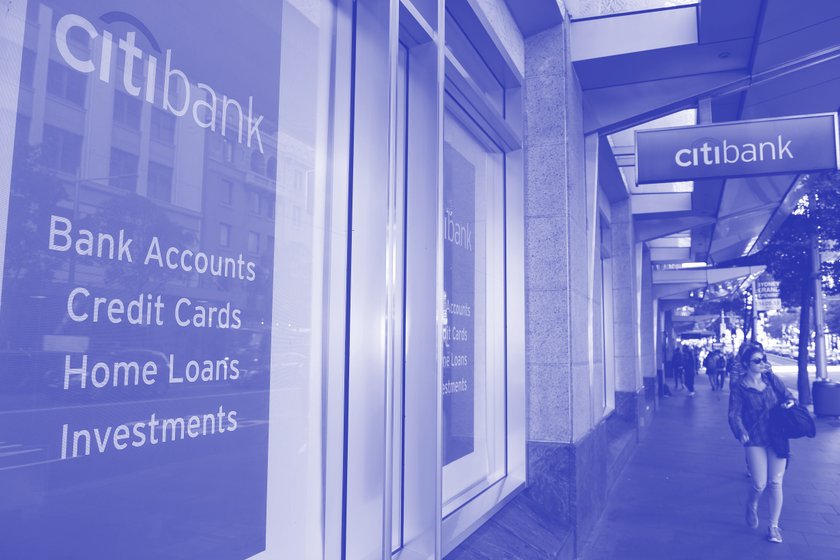
NAB's acquisition of Citi's Australia consumer banking portfolio has doubled its credit card market share at a time when competition from BNPL and Amex is rising and stress in the economy builds.

Over the last six months, ANZ, CBA and NAB have all pulled back in various ways from Asia. But in the case of ANZ - and Macquarie - it’s less a story of retreat from the region than of expansion.

Driven by younger consumers, lower fees and debt aversion, debit cards have grown strongly for two decades, largely at the expense of traditional credit cards. But the shift seems to have halted.

Having once shunned heavy-emitting companies, banks are now instead offering tailored loans to help them navigate the energy transition.
Bank M&A, a notorious destroyer of shareholder value, is again in focus due to the ANZ-Suncorp transaction. So how has the last big deal in the sector panned out?

While buy now, pay later and debit cards have dominated headlines, venerable American Express has been quietly growing its market share and lending.

But the big four bank has masterfully retained a lucrative government contract to cover public servants' travel and expenses.

NAB's new CEO runs its business bank. His biggest rival is at Commonwealth Bank. So what is CBA thinking? And why doesn't that include lending to startups?

McEwan has simplified, stabilised and rebuilt NAB's momentum following the dark days of the Royal Commission. Now Andrew Irvine is tasked with maintaining it.

In just over a decade, payments fintechs have built a 25% market share in the big bank-dominated merchant payment processing sector, an opaque but crucial business.
The major banks have too much capital and not enough to do with it. They already started buying back shares, and in 2024 the market is expecting more.

Intense competition for mortgages and deposits crunched big bank margins in the second half of 2023 but investors are happier now as competition backs off.

The market for bank stocks has settled as investors and analysts finish digesting the fine print of their results. And they're not expecting a rewarding 2024.

The margins in home mortgages are tightening so banks are shifting their attention to the smaller business sector - long dominated by NAB. So what does the boss of its business bank think?

As banks look to improve the credit quality of their SME loanbooks, private credit and private equity see opportunity amid stress and reduced borrowing options.

Chief executive Alexis George conceded the market reaction to a new partnership with a UK neobank was disappointing, as shares in the AMP fell by up to 15%.
The banks have too much capital and not enough to do with it. The sector is clearly ex-growth and went downhill into the second half. So where now?

Once notorious for surprising and messy results, NAB now delivers pretty much exactly what investors expect. It's the economy that's the issue.

Your email address will be stored in accordance with our privacy policy.