Jim Chalmers' federal budget seeks to balance a longer-term economic vision with the more politically pressing need to address cost of living pressures. The Capital Brief team dissects what it means for the different sectors in Australia's new economy.
Australian politics
The government may have hoped to win the front pages with coverage of a budget that delivers cost-of-living relief and a new interventionist agenda. It got something else.
It's unclear whether this is an election budget, but Treasurer Jim Chalmers is setting up a stark choice for voters.
Jim Chalmers wants universities to dip into their coffers to build housing needed to absorb international students.
The stakes have never been higher for Treasurer Jim Chalmers, with his third budget containing cost of living measures that are far from certain to work.
A motion calls on Foreign Minister Penny Wong to explain to the Senate what Prime Minister Anthony Albanese knew about the document before it was sent to ministers and department heads.
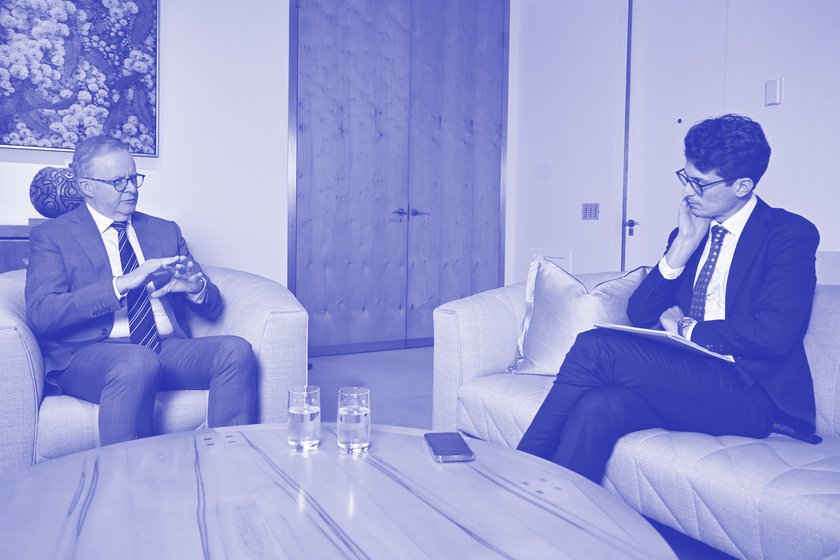
In an exclusive interview with Capital Brief, Anthony Albanese said the process went through “many hours of many meetings, at every level of our cabinet processes" - but the federal opposition is not convinced.
Prime ministers don't do long-form interviews very often anymore. Which is why Anthony Albanese's first interview with Capital Brief was so illuminating.
The Prime Minister has confirmed his centrepiece policy will be a key theme of the next election, dismissing suggestions it will be a tough political sell on the hustings.
A transcript of Capital Brief's interview with Prime Minister Anthony Albanese ahead of tomorrow's budget.
In an exclusive interview with Capital Brief ahead of the budget, the Prime Minister gives the strongest defence yet of the government's decision to invest nearly $1 billion in a quantum computing startup.
In an interview with Capital Brief, the treasurer says he's confident his spending decisions can both tackle inflation and offer cost-of-living relief.
Katy Gallagher tells Capital Brief this year’s budget has been the most difficult yet because of the competing challenges of inflation, cost of living and slowing growth.
The interim report is a good sign of where the opposition will take its housing policies heading into the next election.
Anthony Albanese may well have been expecting rate cuts to pave the way for his election run-in. But with inflation still running hot, economists are now bandying about the possibility of a rate rise instead.
What if the $1 billion PsiQuantum deal had less to do with supporting innovation and more to do with national security?
On any measure, this will be the treasurer’s first new economy-focused budget. But is the public ready for it?
Cameron Murray is increasingly known for opposing the mainstream on key economic issues - ranging from superannuation, to nuclear, and now the government's embrace of industry policy.
Revelations by Capital Brief that the government distributed a secret manual to avoid Senate questions add to the political and economic headaches facing the government.
The co-founder and chief executive of PsiQuantum says he believes there is “no alternative” to leveraging the semiconductor industry as a means to build the world’s first commercially useful quantum computer.
Current and former senators, lawyers and a former top judge have said the drafting of the document could result in contempt of the Senate.
The federal Treasurer is set to deliver a full-throated defence of the government's controversial industry policy and hit back at 'nostalgist' critics of the approach.
It's possibly the biggest ever injection of Australian taxpayer funds into a startup. But will the Albanese government's $940 million quantum computing bet pay off?
Australia is home to some of the world's most renowned quantum researchers and companies, yet the government chose an American startup to invest $940 million in.
Capital Brief has seen a document sent by Anthony Albanese’s office advising departments on how to handle questions on notice from Senate estimates. Current and former senators say the edict represents contempt of the Senate.